Showing posts with label best. Show all posts
Showing posts with label best. Show all posts
Thursday, 13 April 2017
Best Homeopathy Treatment Chennai Best Homeopathy Doctor Chennai Itch and itching
Best Homeopathy Treatment Chennai,Best Homeopathy Doctor Chennai: Itch and itching

Thursday, 16 February 2017
Who Suffers Pain Best Men or Women
Today's short post from sciencedaily.com (see link below) somewhat dispels the myth that women are better bearers of pain than men. Of course, logically, this is nonsense because nobody suffers the same pain for the same reasons - it all depends on the severity of your condition. This especially applies to neuropathy patients. However, scientifically these findings suggest that there is very little difference between the sexes.

Date:September 10, 2014 Source: Plataforma SINC
Summary:
Resilience, a person's ability to overcome adverse circumstances, is the main quality associated with pain tolerance among patients and their adjustment to chronic pain. This is the result of a new study that shows that the effect of gender on this ability is not as significant as originally thought.
Resilience, a person's ability to overcome adverse circumstances, is the main quality associated with pain tolerance among patients and their adjustment to chronic pain. This is the result of a new study carried out at the University of Málaga that shows that the effect of gender on this ability is not as significant as originally thought.
Over the years a number of clinical trials have shown important gender differences with regard to susceptibility to pain through illness, effectiveness of medications and recovery after anesthetic. Furthermore, these results coincide with general lore where it is often said that women tolerate pain better than men.
However, a new study led by researchers at Malaga University with the aim of analyzing the differences between men and women in terms of their experience with chronic pain has dispelled this theory, revealing that these differences are minimal.
Quite the opposite, it is a person's resilience -the ability to overcome adverse circumstances- that determines the high or low acceptance of pain, as it is related to a series of characteristics that provide the individual with resources to cope with chronic pain.
400 patients with chronic spinal pain (190 men and 210 women) treated in primary care centers took part in this study and the findings show more similarities than differences between the two sexes.
"More resilient individuals tend to accept their pain, that is, they tend to understand that their ailment is chronic and they stop focusing on trying to get the pain to disappear, to focus their energy on enhancing their quality of life, despite the pain," Carmen Ramírez-Maestre, the main author and researcher at the Andalusian institution, said.
"In this regard," continued Ramírez-Maestre, "patients who are able to accept their pain feel less pain, they are more active on a daily basis and have a better mood."
Fear of pain
Also, the findings, which were published recently in The Journal of Pain, showed that patients that feared pain also experienced significantly more anxiety and depression.
"However, this fear was only related to a greater degree of pain in the samples of men and this was the only difference found between the sexes," concludes the author.
Story Source:
The above story is based on materials provided by Plataforma SINC. Note: Materials may be edited for content and length.
Journal Reference:
Carmen Ramírez-Maestre, Rosa Esteve. The Role of Sex/Gender in the Experience of Pain: Resilience, Fear, and Acceptance as Central Variables in the Adjustment of Men and Women With Chronic Pain. The Journal of Pain, 2014; 15 (6): 608 DOI: 10.1016/j.jpain.2014.02.006
http://www.sciencedaily.com/releases/2014/09/140910083339.htm
Saturday, 19 November 2016
Are Neurontin And Lyrica Really The Best Options For Neuropathic Pain
Today's post from wellnessresources.com (see link below) is an out and out attack on Lyrica (pregabalin) and neurontin as drugs for neuropathic symptoms. However, it has to be said, it's now wildly out of date. Nevertheless, the prophetic warnings in the article have been borne out. It was written in 2009 and since then the FDA has issued strong warnings about Lyrica...and Pfizer (the manufacturers) have themselves withdrawn positive advice for its use in tackling diabetic and HIV-related neuropathy. Yet, these drugs are still universally popular and widely prescribed by doctors. Is this a case of heavy promotion by the drug company, or a refusal to face the facts on the part of health professionals? Unfortunately, Lyrica is one of those drugs that seems to have a multi-function and is prescribed for all sorts of nerve problems. It is so deeply entrenched in the lexicon of nerve problem treatments that subsequent warnings, law suits and withdrawals of support from its own maker, have had little effect on its popularity. If your doctor or neurologist wants to prescribe Lyrica for you, it may be time to pose some serious questions, especially if your neuropathy stems from diabetes or HIV-related causes. There are alternatives which may be safer for you in the long run. More articles on this subject can be found by typing in 'Lyrica' in the search box to the right of this blog.

Byron J. Richards, Board Certified Clinical Nutritionist Wednesday, October 14, 2009
Neurontin and its newer more potent version, Lyrica, are widely used for off-label indications that are an outright flagrant danger to the public. These blockbuster drugs were approved for use even though the FDA had no idea what they actually did in the brain. A shocking new study shows that they block the formation of new brain synapses1, drastically reducing the potential for rejuvenating brain plasticity – meaning that these drugs will cause brain decline faster than any substance known to mankind.
The problem of these drugs is compounded by their flagrant illegal marketing. Neurontin was approved by the FDA for epilepsy back in 1994. The drug underwent massive illegal off-label promotion that cost Warner-Lambert 430 million dollars (the very first big fine for off-label promotion). The drug is now owned by Pfizer. Pfizer also owns Lyrica, a super-potent version of Neurontin. It has been approved by the FDA for various types of pain and fibromyalgia. Lyrica is one of four drugs which a subsidiary of Pfizer illegally marketed, resulting in a $2.3 billion settlement against Pfizer.
Even though the marketing of these drugs has been heavily fined, they continue to rack up billions in sales from the off-label uses. Doctors use them for all manner of nerve issues because they are good at suppressing symptoms. However, such uses can no longer be justified because the actual mechanism of the drugs is finally understood and they are creating a significant long-term reduction in nerve health.
The researchers in the above study try to downplay the serious nature of the drugs by saying “adult neurons don’t form many new synapses.” That is simply not true. The new science is showing that brain health during aging relies on the formation of new synapses. Even these researchers managed to question the common use of these medications in pregnant women. How is a fetus supposed to make new nerve cells when the mother is taking a drug that blocks them?
These are the kind of situations the FDA should be all over. As usual, the FDA is sitting around pondering a suicide warning for Lyrica while its off-label uses include bi-polar disorder and migraine headaches. The FDA is likely to twiddle its thumbs for the next decade on the brain damage issue. Consumer beware.
http://www.wellnessresources.com/freedom/articles/neurontin_and_lyrica_are_a_death_sentence_for_new_brain_synapses/
Saturday, 22 October 2016
Alpha Lipoic Acid One Of The Best Supplements For Neuropathy
Today's comprehensive post comes from a body-building site called truemuscle.com (see link below) but the information it provides could be of direct benefit for neuropathy patients too. Many people living with neuropathy regularly take Alpha Lipoic Acid (often alongside Acetyl L Carnitine) because they've been told/advised, or have heard that it can help with the symptoms but I'd like to bet that very few people know exactly what it is, how it works and how much to safely take. This article may be from an unexpected source but all the information you need about this anti-oxidant is here and easily digestible. You'd be surprised how many other aspects of your life it can benefit too. However, it's best to discuss this with your doctor and do your own research too and remember, just as with all treatments for neuropathy...what works for one, doesn't necessarily work for another. Just as important is the cost: a dose of 400 to 600 mg a day is not cheap!

Description:
What is it about foods like broccoli and spinach that make them so healthy? There’s the fiber, vitamins and minerals, of course, but then there’s other important chemical compounds we call “antioxidants” too — like alpha lipoic acid (ALA).
Chances are you’ve heard a lot about the many benefits of various antioxidants and Alpha Lipoic Acid — fighting inflammation, helping beat cancer or heart disease, warding off depression and cognitive decline, and so much more — but have you ever wondered what exactly antioxidants are and how they work in the body?
Alpha lipoic acid — one kind of antioxidant — is a type of compound found in plant foods we commonly eat that scavenges free radicals, fights inflammation and slows the aging process. But perhaps its most famous use is in Alpha Lipoic Acid.
Humans also make a small amount of ALA on their own, although the concentration in our bloodstreams goes up substantially when we eat a healthy diet. Naturally abundant in foods like green veggies, potatoes and certain types of yeast, lipoic acid is similar to a vitamin in that it can also be man-made in a lab so it can be taken as an anti-inflammatory supplement (which is then called alpha lipoic acid).
How Alpha Lipoic Acid Works
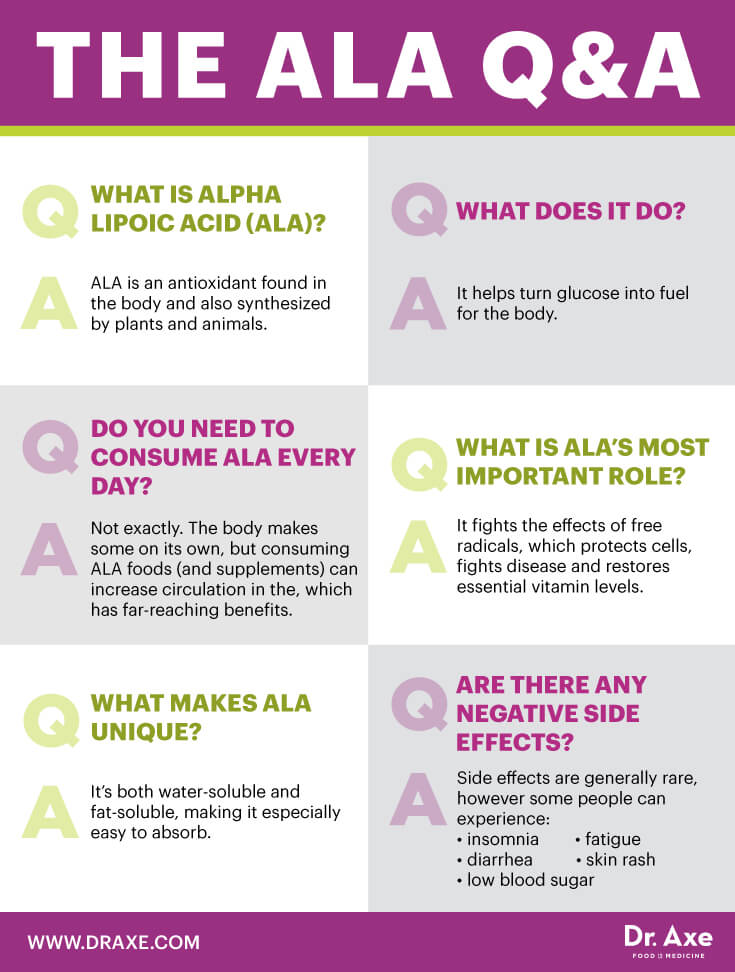
Lipoic acid is found in the body and also synthesized by plants and animals. It’s present in every cell inside the body and helps turn glucose into “fuel” for the body to run off of. Is it “essential” that you consume a certain doseage of alpha lipoic acid every day? Not exactly.
Even though we can make some of it on our own without supplements or outside food sources (which is why it’s not considered an “essential nutrient”), eating an antioxidant-packed diet plus potentially using ALA supplements can increase the amount circulating in the body, with studies show has far-reaching benefits. (1)
ALA’s most valuable role in the body is fighting the effects of free radicals which are dangerous chemical-reaction byproducts that form during the process of oxidation. Within our cells, ALA is converted into dihydrolipoic acid, which has protective effects over normal cellular reactions.
As oxidation takes place in the body over time — due to normal chemical reactions like eating or moving, but also from exposure to environmental pollutants and toxins — certain compounds can become very reactive and damage cells. At times, this causes abnormal cells to grow and multiply, or it can have other effects like slowing metabolic efficiency and changing neuron signaling.
Like other antioxidants, alpha lipoic acid can help slow down cellular damage that is one of the root causes of diseases like cancer, heart disease and diabetes. It also works in the body to restore essential vitamin levels, such as vitamin E and vitamin C, along with helping the body digest and utilize carbohydrate molecules while turning them into usable energy. (2)
In addition, alpha lipoic acid works like a synergist with B vitamins, which are needed for turning all macronutrients (this link doesn't appear on the original site any more - see alternative link here Ed.) from food into energy. And it’s synthesized and bound to protein molecules, making it act as a cofactor for several important mitochondrial enzymes. (3)
Something that makes ALA unique is that it’s both water-soluble and fat-soluble, unlike other nutrients (like B vitamins or vitamin A, C, D or E), which can only be properly absorbed with either one or the other. (4) There’s some evidence that ALA is acts as a “heavy metal chelator,” binding to metals (also called “toxins”) in the body, including mercury, arsenic, iron and other forms of free radicals that make their way into the bloodstream through water, air, chemical products and the food supply.
Finally (as if this wasn’t enough!), alpha lipoic acid can increase how the body uses a very important antioxidant known as glutathione and it might increase energy metabolism too — which is why some athletes use ALA supplements for enhanced physical performance.
5 Alpha Lipoic Acid Health Benefits
Because it acts like an antidote to oxidative stress and inflammation, alpha lipoic acid seems to fight damage done to the blood vessels, brain, neurons, and organs like the heart or liver. This mean it offers numerous benefits throughout the whole body, from naturally treating Alzheimer’s disease to controlling liver disease.
Because ALA isn’t an official essential nutrient, there hasn’t been an established daily recommendation needed to prevent a deficiency. However, being low in antioxidants in general can speed up in the aging process, resulting in symptoms like a weakened immune function, decreased muscle mass, cardiovascular problems and memory problems.
Here are five ways that including more alpha lipoic acid in your diet (and for some people taking supplements too) can help keep you feeling young and healthy:
1. Fights Diabetes and Diabetic Complications
Because alpha lipoic acid can protect cells and neurons involved in hormone production, one benefit is it offers protection against diabetes. ALA is considered an effective drug in the treatment of diabetic distal sensory-motor neuropathy, which affects about 50 percent of people with diabetes. (5) In dietary supplement form, ALA seems to help improve insulin sensitivity and might also offer protection against metabolic syndrome — a term given to a cluster of conditions like high blood pressure, cholesterol and body weight. Some evidence also shows that it can help lower blood sugar levels.
ALA is used to help relieve complications and symptoms of diabetes caused by nerve damage, including numbness in the legs and arms, cardiovascular problems, eye-related disorders, pain, and swelling. That’s why it should be part of any diabetic diet plan to treat this common disorder. People who experience peripheral neuropathy as a side effect of diabetes can find relief from pain, burning, itching, tingling and numbness using ALA, although most studies show that high doses in IV form are most effective as opposed to eating ALA-rich foods.
A major benefit of alpha lipoic supplementation in diabetics is the lowered risk for neuropathic complications that affect the heart, since around 25 percent of people with diabetes develop cardiovascular autonomic neuropathy (CAN). CAN is characterized by reduced heart rate variability and is associated with an increased risk of mortality in people with diabetes. Research suggests that supplementing with 600 milligrams a day of ALA (or “LA” as it is sometimes called) for three weeks significantly reduces the symptoms of diabetic peripheral neuropathy, although some doctors choose to use doses up to 1,800 milligrams a day safely in their patients under supervision.
2. Preserves Eye Health
Oxidative stress can damage nerves in the eyes and cause vision problems, especially in people with diabetes or older adults. Alpha lipoic acid has been used successfully to help control symptoms of eye-related disorders, including vision loss, macular degeneration, retina damage, cataracts, glaucoma and Wilson’s disease.
Results from certain studies demonstrate that long-term use of alphalipoic acid has beneficial effects on the development of retinopathy since it halts oxidative damage that can result in modified DNA in the retina. (6) As people age, their vision becomes much more compromised, which is why it’s important to eat a nutrient-dense diet well before old age to prevent degeneration of eye tissue or vision loss early on.
3. Prevents Memory Loss and Cognitive Decline
We know that a nutrient-dense diet filled with various colorful “brain foods” helps protect memory. Some health care professionals use alpha lipoic acid supplements to further help prevent their patients from experiencing neuron damage, memory loss, motor impairment and changes in cognitive functioning because of it antioxidant activity. ALA seems to easily make its way into the brain by passing the blood-brain barrier, where it can protect delicate brain and nerve tissue. It’s also used to prevent strokes and other brain problems, including dementia in older adults.
Recent experiments using rats have shown that ALA can help reverse the damage in aging cells of the brain, improve performance in memory tasks, lower oxidative damage and improve mitochondrial function, although we still don’t know how well these benefits can apply to aging humans. (7)
4. Helps Boost Glutathione
Glutathione is considered the “master antioxidant” by many experts, since it’s crucial for immunity, cellular health and disease prevention. Some studies have found that 300–1,200 milligrams of alpha lipoic acid helps increase the ability of glutathione to regulate the body’s immune response and fight off diseases like diabetes/insulin resistance or even HIV/AIDS. (8) In adults, supplementation with alpha lipoic acid seems to positively impact patients with immune deficiency syndromes and serious viruses by restoring blood total glutathione levels and improving functional reactivity of lymphocytes to T-cell mitogens.
5. Might Help Protect Skin from Damage
When it comes to battling physical signs of aging on the skin, certain studies have found that topical treatment creams containing 5 percent alpha lipoic acid can help reduce fine lines caused by exposure to sun ways. Skin damage is one side effect of high amounts of free radicals, which is why antioxidant-packed fruits and veggies are said to keep you looking young.
How Much Do We Need? Plus Best Sources of Alpha Lipoic Acid
The best way to get any nutrients is ideally through real food sources, since this is how your body knows how to absorb and use various chemicals best. ALA is found in many different plant and animal sources, since it’s bound to protein molecules (especiallylysine).
The concentration of ALA in different foods can vary widely depending on where they’re grown, the quality of the soil, how fresh they are and how they’re prepared, so it’s hard to quantify how much is in each type of food. There hasn’t been much research done to draw conclusions about how much ALA is found in particular foods, although we know vegetables and certain organ meats seem to be highest.
That being said, when you eat a whole food-based diet and vary the types of things you eat, chances are you consume a decent amount in addition to what your body already makes on its own.
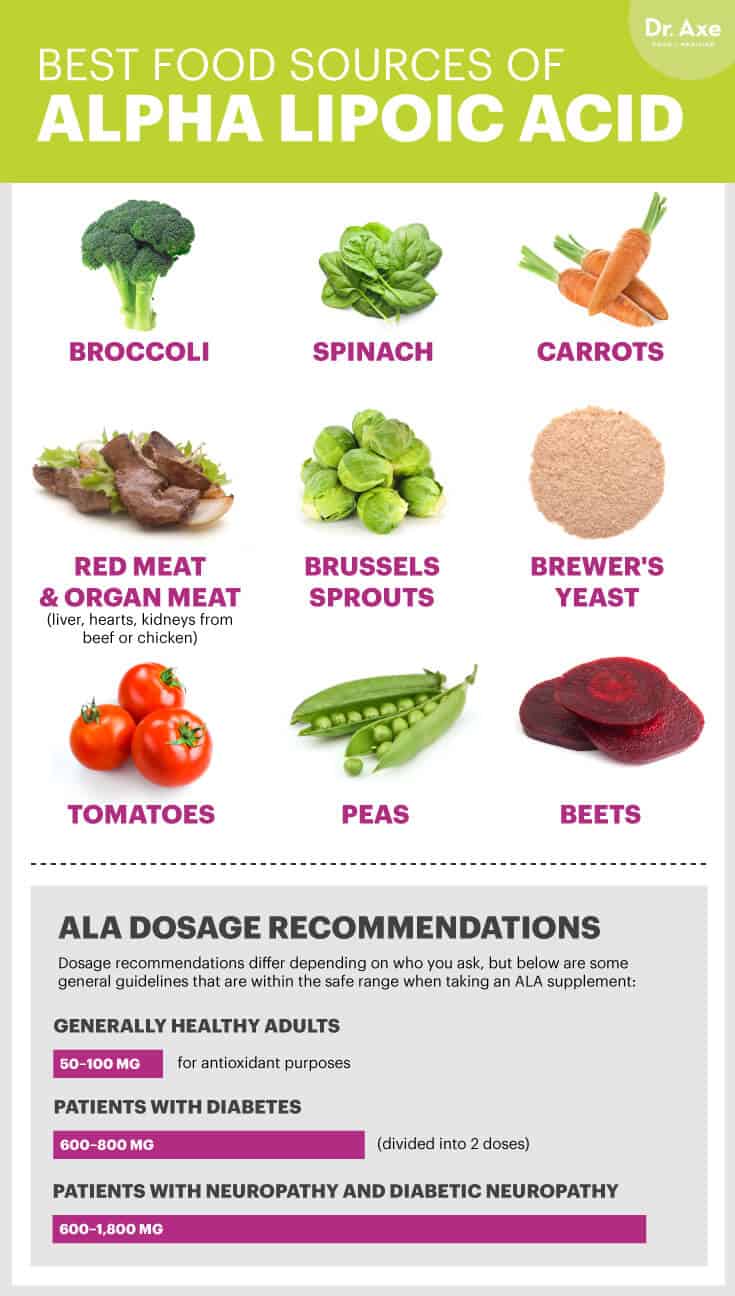
Here are some of the best food sources of alpha lipoic acid (9):
Broccoli
Spinach
Red meat
Organ meat (sch as liver, hearts, kidneys from beef or chicken)
Brussel sprouts
Tomatoes
Peas
Brewer’s yeast
Beets
Carrots
Alpha Lipoic Acid Dosage Recommendations
If you do choose to take ALA supplements, keep in mind that taking more won’t always offer better results. While side effects and risks of taking more seem to be very rare (considering it’s a natural chemical found in the body at all times), as little as 20–50 milligrams per day seems to be beneficial for general preventative health. Larger doses up to 600–800 milligrams per day are sometimes used in patients with diabetes or cognitive disorders but not recommended for the general public.
Dosage recommendations differ depending on who you ask, but below are some general guidelines that are within the safe range:
50–100 milligrams for antioxidant purposes in generally healthy adults
600–800 milligrams for patients with diabetes (divided into two doses, usually tablets are 30–50 milligrams each)
600–1,800 milligrams for patients with neuropathy and diabetic neuropathy (dosages this high should only be taken with supervision from a doctor)
According to researchers from Oregon State University, the amounts of lipoic acid available in dietary supplements (ranging in dosage from 200–600 milligrams) can be as much as 1,000 times greater than the amounts that could be obtained through someone’s diet alone! Taking ALA supplements with a meal is believed to decrease its bioavailability, so most experts recommend taking it on an empty stomach (or at least one hour before or after) for the best results.
Possible Side Effects and Interactions of ALA
Alpha lipoic acid supplements haven’t been studied in children or women who are pregnant or breastfeeding, so right now it’s intended for use in adults only. Side effects of ALA in supplement form are generally rare but for some people can include: insomnia, fatigue, diarrhea, skin rash or low blood sugar levels (especially in people with diabetes or low blood sugar who are taking medications).
Some potential interactions, or circumstances where you want to speak to your doctor before taking extra alpha lipoic supplements, include:
if you have a thiamine deficiency (vitamin B1), which is associated with liver disease/alcohol abuse
if you’re taking any medications for diabetes for insulin control, since this can raise the risk for hypoglycemia and low blood sugar
if you’re recovering from chemotherapy treatment or taking cancer medications
if you have a history of a thyroid disorder
http://www.truemuscle.com/alpha-lipoic-acid-300mg
Friday, 23 September 2016
What is the best treatment for sciatica trapped nerve
In this post everybody ought to help you to get a useful reference based on research associated with present content articles What is the best treatment for sciatica trapped nerve potential for discussion because a lot of people therefore, that look for the program. inside guide Gathering we all utilize numerous engines like google are graphics that will be about What is the best treatment for sciatica trapped nerve .


What is the best treatment for sciatica trapped nerve - to support grow the eye one's targeted traffic are usually pleased in making these pages. fixing the grade of this article will we try on a later date for you to seriously have an understanding of soon after reading this article write-up. Last but not least, it's not at all a number of words and phrases that needs to be made to convince most people. however , with the boundaries for terms, you can easlily sole latest all the What is the best treatment for sciatica trapped nerve argument all the way up in this case
Tuesday, 19 July 2016
Best Foods For Pregnancy

Korean Small Dishes Appetizer Best Foods Beverages Pinterest
The Supermarket Low Price Leader. Employee Owned grocery store. Low Prices. Grocery, bulk foods, bakery, deli, meat, butcher, produce, milk more..
Korean Small Dishes Appetizer Best Foods Beverages Pinterest

Koeleman Gherkins Augurken Sweet Sour Pickles
Subscribe to:
Posts (Atom)