Showing posts with label Supplements. Show all posts

Friday, 21 April 2017

Vitamins Supplements for a Healthy Life


Ever since we were kids, adults have preached the importance of vitamins for strong and healthy bodies. From school lessons to television programs most children know the basic vitamins: A, B, C, D and E. However, as adults the role vitamins play in our lives takes on a whole new meaning. The skincare and anti aging industry learned long ago the impact that certain vitamins can have on the complexion and even the aging process. Out of the vitamins we need, you’ll want to get to know the vitamin B family, which has a huge laundry list of responsibilities.

Most people that are not very skincare or health savvy might be very surprised to know that there is not just one vitamin B. There is, in fact, an entire family of B vitamins - all of which play their own roles in keeping the human body functioning properly. Once you become familiar with what the vitamin B family does, you’ll want to make sure they’re in your life on a daily basis.

The vitamin B family is made up of the following: B1, B2, B3, B4, B5, B6, B7, B8, B9 and B12. This fairly large group of vitamins has responsibilities ranging from keeping the immune system intact, promoting healthy nerves, providing energy, improving memory, focus and proper circulation, to name a few. However, some of the B vitamins also have the ability to make a positive impact on your complexion. These days it is not uncommon to see B vitamins listed somewhere on a majority of skincare and anti aging products on store shelves. While not all of the B vitamins listed work to benefit a person’s complexion, there is a few that stand out and are the darlings of the skincare and anti aging industry.


Vitamin C improves the physical and mental health by assisting the functioning from the immune system. B complex vitamins like niacin, folate, thiamine, riboflavin and pantothenic acid may help in the production of Neuro transmitters. Magnesium can assist in the muscle relaxation and so provide greater relief from anxiety. Tryptophan helps in the enhancement from the nervous system while Coenzyme Q10 adds to the oxygen transport in the tissues. Omega 3 is a vital item that helps to reduce the anxiety. , Alpha Linolenic acid is really a vitamin that provides Omega 3. The retina needs vitamin A for color and low light vision. This vitamin will be the appropriate hormone functions. We could reduce the risk of oral and carcinoma of the lung by consuming vitamin A.

For the processing of fats, protein and carbohydrates vitamin B1 is crucial. It will also help- in the proper functioning in the nerve cells. It is going to stabilize appetite and generates energy. Vitamin B2 works well for the formation of antibodies and red blood cells and therefore prevents anemia. Vitamin C and E reduces the aging of the skin. It assists to to heal fractures, wounds and scar tissues. Vitamin E will raise the oxygen content within the blood and thus keeps your skin young. Vitamin K is essential for the clotting of the blood.

Vitamins can be purchased in the natural for and synthetic form. The organic substances perfectly located at the plants, animals and other living beings are termed as natural vitamin. We get plenty of vitamins in the food items like corn breads, wheat, nuts, cereal, oatmeal etc. Fruits and green vegetables are the other sources of vitamins. Different vitamins are contained in different food items. One item won't provide all the essential vitamins supplements. And we all must take care to consume number of vitamin rich food. Vitamin cannot produce energy however they can help in different energy producing processes.

Vitamin A - should be used for healthy skin and tissue and helps in the excretion of mucus, it can also help to prevent infection which is needed to maintain a healthy immune system. It could be found in liver, cheese, green vegetables and carrots.

Vitamin C - it will help heal wounds and infections and protects the immune system it may be found in fresh fruit and vegetables.

Vitamin D - is crucial for the maintenance of healthy bones and teeth as well as helps to regulate calcium in your body, it can be found in eggs, milk, breakfast cereals and margarine.

Vitamin E - really helps to protect our cell membranes and the nervous and natural defenses it can be found in vegetable oils, whole grains, nuts and green vegetables.

Vitamin K - this helps to maintain our energy so helping with blood clotting and may be found in liver, meat, potato and cereals.

Vitamin B1 - helps regulate our energy metabolic process and can be found in bread, potatoes, meat and wholegrain cereals.

Vitamin B2 - this utilises energy from fats and protein and can be found in meat, milk and eggs.

Vitamin B6 - this is necessary for protein metabolism and can be found in potatoes, meat, vegetables, milk and fish.

Vitamin B12 - this can be essential for our red blood cells and our nervous system and can be located in liver, milk, fish and eggs.

Folate - this helps with creation of red blood cells and our nervous system and can be found in raw vegetables.

Tuesday, 28 March 2017

Seven Super Supplements For Nerve Health


Today's post from drperlmutter.com (see link below) is one for those of us with neuropathy and a fairly healthy wallet! I often think that supplement recommendations are a bit of a luxury for a select few because they're not cheap and many people's budgets just can't stretch to extras that may or may not work. That said, if it's possible financially, you may want to take a look at some of these seven recommendations here. They are all widely reported as having benefits for a health nervous system (apart from other beneficial health areas which you could see as a bonus) and the list and explanations could be very useful as a base from which to start, especially if your normal diet isn't the healthiest on the block. Unfortunately, supplement takers are often the people who are most conscious about their overall health and as such may not need them as much as others. If you do your research on the web, you'll see that each of these seven is claimed to be helpful for neuropathy patients but if you're at all concerned, talk to your doctor. Please watch out for supplements that claim to solve everything in one pill though - they are exorbitantly expensive and their claims are often wildly exaggerated - shopping for individual elements will work out cheaper in the end and then you know what you're putting in your mouth.


Grain Brain and the 7 Super Supplements 
Dr. Perlmutter

 
A brain-healthy, Alzheimer’s-fighting diet has properties that extend far beyond just decreasing your daily carb load. To truly provide your body with brain-boosting nutrients and vitamins that help stave off brain disease and other illnesses, you should consider a regular regimen of supplements. These seven supplements will go a long way towards helping you with prevention:


DHA: An omega-3 fatty acid that represents more than 50% of the omega-3 fatty acids in the brain. Numerous studies link high levels of DHA with a decreased risk for dementia, Alzheimer’s and other brain diseases (view some of these studies here on my site). Look to take in about 1,000mg/day. 


Resveratrol:
If you like that red wine is permissible in the Grain Brain lifestyle, then you can thank this natural compound which slows down the aging process, boosts blood flow to the brain, and promotes heart health. In addition to the role it plays in stimulating brain function, resveratrol is also a key ally of our body’s immune system. Target 100mg twice daily.


Turmeric: If you follow me on social media (Facebook, Twitter), then you’ve heard me talk about turmeric before. Turmeric is well known for its anti-inflammatory and antioxidant properties. We can thank turmeric for protecting our mitochondria (thanks to its role in stimulating antioxidant properties), and it also improves glucose metabolism — both of which are essential for reducing one’s risk for brain disease. Try to get 350 mg twice daily.


Probiotics: Research conducted in just the last few years has started to conclude that eating food rich in probiotics can influence brain behavior, and may modulate the effects of stress, anxiety, and depression. In Grain Brain, I dive deeper into the relationship between probiotics and brain health, and today’s researchers are further exploring the role gut bacteria may play in maladies ranging from chronic pain to autism. Ideally, get your probiotics through a supplement that contains at least 10 billion active cultures from at least ten different strains, including lactobaccilus acidophilus and bifidobacterium.


Coconut Oil: If you follow this blog, you know I am a big fan of coconut oil and probably know why it’s an important part of our diet. It’s even a part of my anti-Alzheimer’s trio! Go for at least 1-2 tablespoons of an organic variety daily.


Alpha-lipoic Acid: Alpha-lipoic acid is a powerful antioxidant that works to protect brain and nerve tissue. Look to get 600 mg/day. 


Vitamin D: I can’t say enough about the importance of Vitamin D, and that’s why I devote five pages to it in Grain Brain. To learn more, watch my video on the subject. It’s ideal to start with 5,000 units of Vitamin D3 daily, get tested after three months, and adjust accordingly.

As with any dietary/health changes, these are suggested guidelines only, and you should consult with your physician before making any changes to, or beginning, a supplement plan.

For more information, order your copy of Grain Brain today and join Dr. Perlmutter’s email list.

http://www.drperlmutter.com/grain-brain-seven-super-supplements/?hvid=2vNL2

Sunday, 13 November 2016

Its Sensible To Be Wary Of Supplements


Today's post from health.com (see link below) is an important article for most people taking any form of supplements but especially for neuropathy patients, who resort to supplements largely because they've heard they may help when regular medicine fails (all too often the case with nerve pain!). The article is a warning to be careful about which supplements you choose and certainly which supplements you combine. As far as I can see, there are no supplements here that are commonly used to relieve nerve pain symptoms however, to ignore it for that reason, is missing the point. We tend to rely on the internet and hopefully do our research about anything we take but it's so easy to get caught up in the supplement spiral and let them mount up in our medicine cupboards, so that we end up taking massive amounts of things without really knowing if they're doing any good or not. Far more important is the fact that we aren't aware of the dangers of supplements maybe doing us harm! It's vitally important that you read as much as possible about any individual supplement and certainly don't rely on advertising blurb, or recommendations via e-mail of a 'doctor' who can perform wonder cures. It's a given that if we're taking supplements, our normal prescriptions aren't working, or we've been tested to show a deficiency somewhere but I can't over stress the dangers of randomly taking supplements based on the slightest of evidence, or worse, hearsay. Remember, just because a product is 'herbal' or 'natural' doesn't mean that it doesn't contain powerful ingredients!
 

These 15 Supplement Ingredients Carry Serious Health Risks, According to a New Report: Think cancer, cardiac arrest, liver damage, and more.
By Amanda MacMillan   Last updated: Jul 27, 2016

Despite their popularity in pharmacies, health food stores, and even hospitals, over-the-counter dietary supplements are not regulated in a way that ensures their safety and efficacy, says a new article published today by Consumer Reports. These products have the potential to be contaminated with dangerous bacteria or to differ widely from what their labels claim them to be. And in some cases, they deliberately contain ingredients that can cause cancer, organ damage, cardiac arrest, and other serious health problems.

The report warns consumers to stay away from 15 such ingredients, found in supplements sold in major retail stores across the United States. These products may be especially harmful for people with pre-existing medical conditions, the authors say, or who take other supplements or drugs (prescription or over-the-counter) that could trigger dangerous interactions.

The ingredients, and their claimed benefits, include:

Aconite, used for inflammation, joint pain, or gout
Caffeine powder, used for weight loss, increased energy, and athletic performance
Chaparral, used for weight loss, inflammation, colds, rashes, and infections
Coltsfoot, used for cough, sore throat, laryngitis, and asthma
Comfrey, used for cough, heavy periods, stomach problems, and chest pain
Germander, used for weight loss, fever, arthritis, gout, and stomach problems
Greater Celadine, used for stomach aches
Green tea extract powder, used for weight loss
Kava, used for anxiety and insomnia
Lobelia, used for respiratory problems and for quitting smoking
Methylsynephrine, used for weight loss, increased energy, and athletic performance
Pennyroyal oil, used for breathing problems and digestive disorders
Red yeast rice, used for high cholesterol and heart disease
Yohimbe, used for low libido, erectile dysfunction, depression, and weight loss

RELATED: 9 Things to Know Before Buying Another Supplement

These ingredients can also be listed by other names. Their aliases, and the specific risks associated with each ingredient, are published on ConsumerReports.org and available free of charge.

Some of the ingredients have been shown to cause side effects such as vomiting, nausea, dizziness, impaired driving, and breathing problems. Others have been associated with liver damage, cancer, and serious heart problems. And several of them can interact with other medications, says Ellen Kunes, Consumer Reports Health Content Team Leader. The quality of the ingredients and the length of time they’re taken for can also affect the severity of these risks.

“Say I want to lower my cholesterol, and I’ve read that red yeast rice can help do that,” Kunes told Health.com. “But I may already take a prescription statin for that. If I take both of them together, the effects can be magnified—and the results can be dangerous. That’s the bottom line we want to get across to consumers.”

The report also found that shoppers can’t trust pharmacists or retail staff to alert them to the potential harms of these products: When the Consumer Reports staff sent secret shoppers into 60 stores around the country to ask about these ingredients, many store employees gave information that was “either misleading or flat-out wrong.”

RELATED: Warning: Do Not Mix These Supplements

And even if you avoid these 15 most alarming ingredients, there’s no guarantee that any over-the-counter supplement is safe, or that it contains what it’s supposed to. Many consumers don’t realize that supplements are regulated by the government as a food and not as a drug, says Kunes—which means that companies don’t have to go through stringent tests before putting their products on shelves.

“These products don’t always contain what they claim to,” she says. “That could mean you’re just wasting your money on something harmless—but the reality is, a lot of it is not harmless.” The industry is much larger than government inspections can keep up with, she adds. “Many times, the FDA only gets involved after they get a report that there’s a problem.”

In the article, Consumer Reports’ chief medical adviser notes that there are certain situations in which a person might truly benefit from a supplement—including those who are pregnant, have dietary restrictions, take certain drugs, or have chronic health conditions. But these people should only take the type and dosage recommended by their doctor. They may even be able to take a prescription-strength supplement, which must meet the same safety and efficacy standards as other prescription drugs.

RELATED: Best Foods for Every Vitamin and Mineral

In most other cases, says Kunes, supplements aren’t necessary. “Eating a balanced diet, getting lots of fruit and vegetables, exercising regularly and getting enough sleep, lowering stress—these are the things that are going to truly help you feel healthier,” she says. “We recommend getting your health from food and from healthy habits, rather than popping a pill.”

http://www.health.com/nutrition/supplement-ingredients-to-avoid

Saturday, 22 October 2016

Alpha Lipoic Acid One Of The Best Supplements For Neuropathy


Today's comprehensive post comes from a body-building site called truemuscle.com (see link below) but the information it provides could be of direct benefit for neuropathy patients too. Many people living with neuropathy regularly take Alpha Lipoic Acid (often alongside Acetyl L Carnitine) because they've been told/advised, or have heard that it can help with the symptoms but I'd like to bet that very few people know exactly what it is, how it works and how much to safely take. This article may be from an unexpected source but all the information you need about this anti-oxidant is here and easily digestible. You'd be surprised how many other aspects of your life it can benefit too. However, it's best to discuss this with your doctor and do your own research too and remember, just as with all treatments for neuropathy...what works for one, doesn't necessarily work for another. Just as important is the cost: a dose of 400 to 600 mg a day is not cheap!

Alpha Lipoic Acid

Description:

What is it about foods like broccoli and spinach that make them so healthy? There’s the fiber, vitamins and minerals, of course, but then there’s other important chemical compounds we call “antioxidants” too — like alpha lipoic acid (ALA).

Chances are you’ve heard a lot about the many benefits of various antioxidants and Alpha Lipoic Acid — fighting inflammation, helping beat cancer or heart disease, warding off depression and cognitive decline, and so much more — but have you ever wondered what exactly antioxidants are and how they work in the body?

Alpha lipoic acid — one kind of antioxidant — is a type of compound found in plant foods we commonly eat that scavenges free radicals, fights inflammation and slows the aging process. But perhaps its most famous use is in Alpha Lipoic Acid.

Humans also make a small amount of ALA on their own, although the concentration in our bloodstreams goes up substantially when we eat a healthy diet. Naturally abundant in foods like green veggies, potatoes and certain types of yeast, lipoic acid is similar to a vitamin in that it can also be man-made in a lab so it can be taken as an anti-inflammatory supplement (which is then called alpha lipoic acid).


How Alpha Lipoic Acid Works

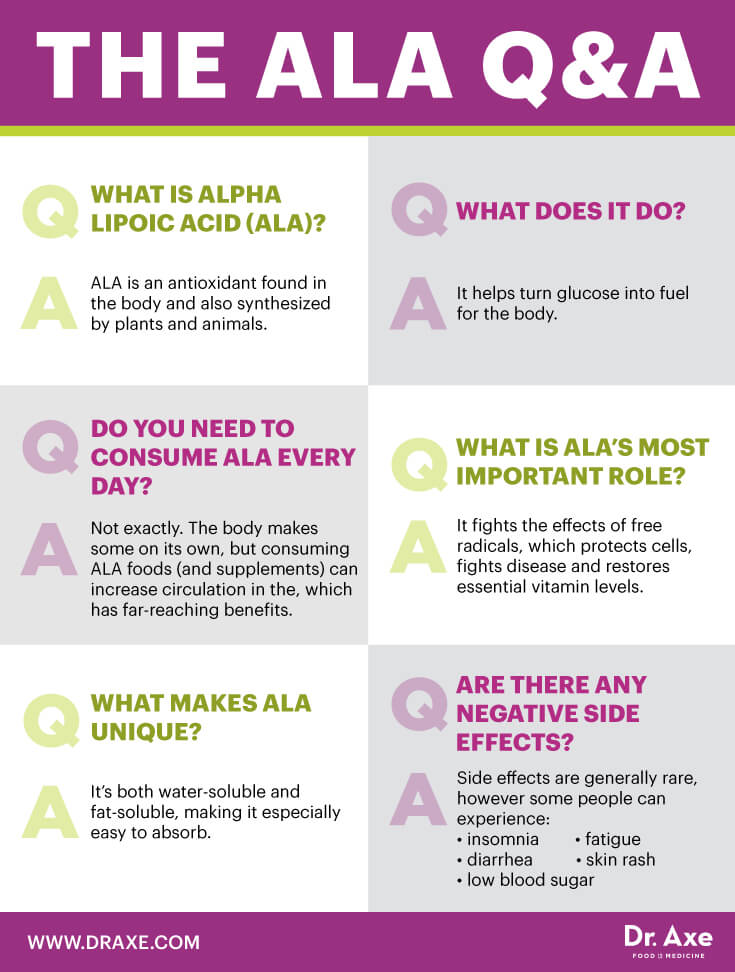
Lipoic acid is found in the body and also synthesized by plants and animals. It’s present in every cell inside the body and helps turn glucose into “fuel” for the body to run off of. Is it “essential” that you consume a certain doseage of alpha lipoic acid every day? Not exactly.

Even though we can make some of it on our own without supplements or outside food sources (which is why it’s not considered an “essential nutrient”), eating an antioxidant-packed diet plus potentially using ALA supplements can increase the amount circulating in the body, with studies show has far-reaching benefits. (1)

ALA’s most valuable role in the body is fighting the effects of free radicals which are dangerous chemical-reaction byproducts that form during the process of oxidation. Within our cells, ALA is converted into dihydrolipoic acid, which has protective effects over normal cellular reactions.

As oxidation takes place in the body over time — due to normal chemical reactions like eating or moving, but also from exposure to environmental pollutants and toxins — certain compounds can become very reactive and damage cells. At times, this causes abnormal cells to grow and multiply, or it can have other effects like slowing metabolic efficiency and changing neuron signaling.

Like other antioxidants, alpha lipoic acid can help slow down cellular damage that is one of the root causes of diseases like cancer, heart disease and diabetes. It also works in the body to restore essential vitamin levels, such as vitamin E and vitamin C, along with helping the body digest and utilize carbohydrate molecules while turning them into usable energy. (2)

In addition, alpha lipoic acid works like a synergist with B vitamins, which are needed for turning all macronutrients (this link doesn't appear on the original site any more - see alternative link here Ed.) from food into energy. And it’s synthesized and bound to protein molecules, making it act as a cofactor for several important mitochondrial enzymes. (3)

Something that makes ALA unique is that it’s both water-soluble and fat-soluble, unlike other nutrients (like B vitamins or vitamin A, C, D or E), which can only be properly absorbed with either one or the other. (4) There’s some evidence that ALA is acts as a “heavy metal chelator,” binding to metals (also called “toxins”) in the body, including mercury, arsenic, iron and other forms of free radicals that make their way into the bloodstream through water, air, chemical products and the food supply.

Finally (as if this wasn’t enough!), alpha lipoic acid can increase how the body uses a very important antioxidant known as glutathione and it might increase energy metabolism too — which is why some athletes use ALA supplements for enhanced physical performance.


5 Alpha Lipoic Acid Health Benefits

Because it acts like an antidote to oxidative stress and inflammation, alpha lipoic acid seems to fight damage done to the blood vessels, brain, neurons, and organs like the heart or liver. This mean it offers numerous benefits throughout the whole body, from naturally treating Alzheimer’s disease to controlling liver disease.

Because ALA isn’t an official essential nutrient, there hasn’t been an established daily recommendation needed to prevent a deficiency. However, being low in antioxidants in general can speed up in the aging process, resulting in symptoms like a weakened immune function, decreased muscle mass, cardiovascular problems and memory problems.

Here are five ways that including more alpha lipoic acid in your diet (and for some people taking supplements too) can help keep you feeling young and healthy:

1. Fights Diabetes and Diabetic Complications

Because alpha lipoic acid can protect cells and neurons involved in hormone production, one benefit is it offers protection against diabetes. ALA is considered an effective drug in the treatment of diabetic distal sensory-motor neuropathy, which affects about 50 percent of people with diabetes. (5) In dietary supplement form, ALA seems to help improve insulin sensitivity and might also offer protection against metabolic syndrome — a term given to a cluster of conditions like high blood pressure, cholesterol and body weight. Some evidence also shows that it can help lower blood sugar levels.

ALA is used to help relieve complications and symptoms of diabetes caused by nerve damage, including numbness in the legs and arms, cardiovascular problems, eye-related disorders, pain, and swelling. That’s why it should be part of any diabetic diet plan to treat this common disorder. People who experience peripheral neuropathy as a side effect of diabetes can find relief from pain, burning, itching, tingling and numbness using ALA, although most studies show that high doses in IV form are most effective as opposed to eating ALA-rich foods.

A major benefit of alpha lipoic supplementation in diabetics is the lowered risk for neuropathic complications that affect the heart, since around 25 percent of people with diabetes develop cardiovascular autonomic neuropathy (CAN). CAN is characterized by reduced heart rate variability and is associated with an increased risk of mortality in people with diabetes. Research suggests that supplementing with 600 milligrams a day of ALA (or “LA” as it is sometimes called) for three weeks significantly reduces the symptoms of diabetic peripheral neuropathy, although some doctors choose to use doses up to 1,800 milligrams a day safely in their patients under supervision.

2. Preserves Eye Health


Oxidative stress can damage nerves in the eyes and cause vision problems, especially in people with diabetes or older adults. Alpha lipoic acid has been used successfully to help control symptoms of eye-related disorders, including vision loss, macular degeneration, retina damage, cataracts, glaucoma and Wilson’s disease.

Results from certain studies demonstrate that long-term use of alphalipoic acid has beneficial effects on the development of retinopathy since it halts oxidative damage that can result in modified DNA in the retina. (6) As people age, their vision becomes much more compromised, which is why it’s important to eat a nutrient-dense diet well before old age to prevent degeneration of eye tissue or vision loss early on.


3. Prevents Memory Loss and Cognitive Decline

We know that a nutrient-dense diet filled with various colorful “brain foods” helps protect memory. Some health care professionals use alpha lipoic acid supplements to further help prevent their patients from experiencing neuron damage, memory loss, motor impairment and changes in cognitive functioning because of it antioxidant activity. ALA seems to easily make its way into the brain by passing the blood-brain barrier, where it can protect delicate brain and nerve tissue. It’s also used to prevent strokes and other brain problems, including dementia in older adults.

Recent experiments using rats have shown that ALA can help reverse the damage in aging cells of the brain, improve performance in memory tasks, lower oxidative damage and improve mitochondrial function, although we still don’t know how well these benefits can apply to aging humans. (7)

4. Helps Boost Glutathione


Glutathione is considered the “master antioxidant” by many experts, since it’s crucial for immunity, cellular health and disease prevention. Some studies have found that 300–1,200 milligrams of alpha lipoic acid helps increase the ability of glutathione to regulate the body’s immune response and fight off diseases like diabetes/insulin resistance or even HIV/AIDS. (8) In adults, supplementation with alpha lipoic acid seems to positively impact patients with immune deficiency syndromes and serious viruses by restoring blood total glutathione levels and improving functional reactivity of lymphocytes to T-cell mitogens.

5. Might Help Protect Skin from Damage


When it comes to battling physical signs of aging on the skin, certain studies have found that topical treatment creams containing 5 percent alpha lipoic acid can help reduce fine lines caused by exposure to sun ways. Skin damage is one side effect of high amounts of free radicals, which is why antioxidant-packed fruits and veggies are said to keep you looking young.


How Much Do We Need? Plus Best Sources of Alpha Lipoic Acid

The best way to get any nutrients is ideally through real food sources, since this is how your body knows how to absorb and use various chemicals best. ALA is found in many different plant and animal sources, since it’s bound to protein molecules (especiallylysine).

The concentration of ALA in different foods can vary widely depending on where they’re grown, the quality of the soil, how fresh they are and how they’re prepared, so it’s hard to quantify how much is in each type of food. There hasn’t been much research done to draw conclusions about how much ALA is found in particular foods, although we know vegetables and certain organ meats seem to be highest.

That being said, when you eat a whole food-based diet and vary the types of things you eat, chances are you consume a decent amount in addition to what your body already makes on its own.

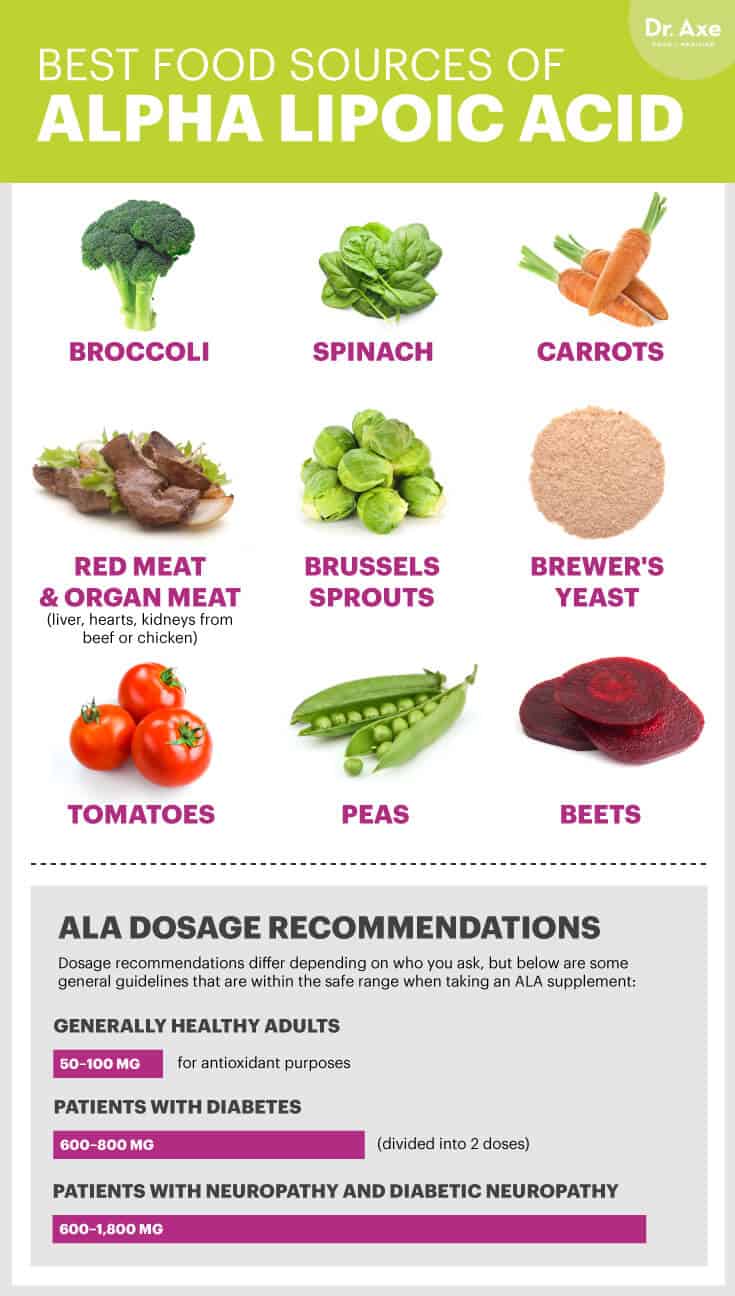
Here are some of the best food sources of alpha lipoic acid (9):
Broccoli
Spinach
Red meat
Organ meat (sch as liver, hearts, kidneys from beef or chicken)
Brussel sprouts
Tomatoes
Peas
Brewer’s yeast
Beets
Carrots 


Alpha Lipoic Acid Dosage Recommendations

If you do choose to take ALA supplements, keep in mind that taking more won’t always offer better results. While side effects and risks of taking more seem to be very rare (considering it’s a natural chemical found in the body at all times), as little as 20–50 milligrams per day seems to be beneficial for general preventative health. Larger doses up to 600–800 milligrams per day are sometimes used in patients with diabetes or cognitive disorders but not recommended for the general public.

Dosage recommendations differ depending on who you ask, but below are some general guidelines that are within the safe range:
50–100 milligrams for antioxidant purposes in generally healthy adults
600–800 milligrams for patients with diabetes (divided into two doses, usually tablets are 30–50 milligrams each)
600–1,800 milligrams for patients with neuropathy and diabetic neuropathy (dosages this high should only be taken with supervision from a doctor)

According to researchers from Oregon State University, the amounts of lipoic acid available in dietary supplements (ranging in dosage from 200–600 milligrams) can be as much as 1,000 times greater than the amounts that could be obtained through someone’s diet alone! Taking ALA supplements with a meal is believed to decrease its bioavailability, so most experts recommend taking it on an empty stomach (or at least one hour before or after) for the best results.


Possible Side Effects and Interactions of ALA

Alpha lipoic acid supplements haven’t been studied in children or women who are pregnant or breastfeeding, so right now it’s intended for use in adults only. Side effects of ALA in supplement form are generally rare but for some people can include: insomnia, fatigue, diarrhea, skin rash or low blood sugar levels (especially in people with diabetes or low blood sugar who are taking medications).

Some potential interactions, or circumstances where you want to speak to your doctor before taking extra alpha lipoic supplements, include:
if you have a thiamine deficiency (vitamin B1), which is associated with liver disease/alcohol abuse
if you’re taking any medications for diabetes for insulin control, since this can raise the risk for hypoglycemia and low blood sugar
if you’re recovering from chemotherapy treatment or taking cancer medications
if you have a history of a thyroid disorder

http://www.truemuscle.com/alpha-lipoic-acid-300mg