Showing posts with label ONE. Show all posts

Monday, 20 February 2017

ANEMIA PROMISING ONE MINUTE POINT OF CARE TEST


A simple point-of-care testing device for anemia could provide more rapid diagnosis of the common blood disorder and allow inexpensive at-home self-monitoring of persons with chronic forms of the disease.

The disposable self-testing device analyzes a single droplet of blood using a chemical reagent that produces visible color changes corresponding to different levels of anemia. The basic test produces results in about 60 seconds and requires no electrical power. A companion smartphone application can automatically correlate the visual results to specific blood hemoglobin levels.
By allowing rapid diagnosis and more convenient monitoring of patients with chronic anemia, the device could help patients receive treatment before the disease becomes severe, potentially heading off emergency room visits and hospitalizations. Anemia, which affects two billion people worldwide, is now diagnosed and monitored using blood tests done with costly test equipment maintained in hospitals, clinics or commercial laboratories.
Because of its simplicity and ability to deliver results without electricity, the device could also be used in resource-poor nations.

A paper describing the device and comparing its sensitivity to gold-standard anemia testing was published August 30 in The Journal of Clinical Investigation. Development of the test has been supported by the FDA-funded Atlantic Pediatric Device Consortium, the Georgia Research Alliance, Children's Healthcare of Atlanta, the Georgia Center of Innovation for Manufacturing and the Global Center for Medical Innovation.
"Our goal is to get this device into patients' hands so they can diagnose and monitor anemia themselves," said Dr. Wilbur Lam, senior author of the paper and a physician in the Aflac Cancer and Blood Disorders Center at Children's Healthcare of Atlanta and the Department of Pediatrics at the Emory University School of Medicine. "Patients could use this device in a way that's very similar to how diabetics use glucose-monitoring devices, but this will be even simpler because this is a visual-based test that doesn't require an additional electrical device to analyze the results."
The test device was developed in a collaboration of Emory University, Children's Healthcare of Atlanta and the Georgia Institute of Technology -- all based in Atlanta. It grew out of a 2011 undergraduate senior design project in the Wallace H. Coulter Department of Biomedical Engineering at Georgia Tech and Emory University. In 2013, it was among the winners of Georgia Tech's InVenture Prize, an innovation competition for undergraduate students, and won first place in the Ideas to SERVE Competition in Georgia Tech's Scheller College of Business.

Using a two-piece prototype device, the test works this way: A patient sticks a finger with a lance similar to those used by diabetics to produce a droplet of blood. The device's cap, a small vial, is then touched to the droplet, drawing in a precise amount of blood using capillary action. The cap containing the blood sample is then placed onto the body of the clear plastic test kit, which contains the chemical reagent. After the cap is closed, the device is briefly shaken to mix the blood and reagent.
"When the capillary is filled, we have a very precise volume of blood, about five microliters, which is less than a droplet -- much less than what is required by other anemia tests," explained Erika Tyburski, the paper's first author and leader of the undergraduate team that developed the device.
Blood hemoglobin then serves as a catalyst for a reduction-oxidation reaction that takes place in the device. After about 45 seconds, the reaction is complete and the patient sees a color ranging from green-blue to red, indicating the degree of anemia.

A label on the device helps with interpretation of the color, or the device could be photographed with a smartphone running an application written by Georgia Tech undergraduate student Alex Weiss and graduate student William Stoy. The app automatically correlates the color to a specific hemoglobin level, and could one day be used to report the data to a physician.
To evaluate sensitivity and specificity of the device, Tyburski studied blood taken from 238 patients, some of them children at Children's Healthcare of Atlanta and the others adults at Emory University's Winship Cancer Institute. Each blood sample was tested four times using the device, and the results were compared to reports provided by conventional hematology analyzers.

The work showed that the results of the one-minute test were consistent with those of the conventional analysis. The smartphone app produced the best results for measuring severe anemia.
"The test doesn't require a skilled technician or a draw of venous blood and you see the results immediately," said Lam, who is also an assistant professor in the Coulter Department of Biomedical Engineering. "We think this is an empowering system, both for the general public and for our patients."
Tyburski and Lam have teamed up with two other partners and worked with Emory's Office of Technology Transfer to launch a startup company, Sanguina, to commercialize the test, which will be known as AnemoCheck™. The test ultimately will require approval from the FDA. The team also plans to study how the test may be applied to specific diseases, such as sickle cell anemia -- which is common in Georgia.
The device could be on pharmacy shelves sometime in 2016, where it might help people like Tyburski, who has suffered mild anemia most of her life. "If I'd had this when I was kid, I could have avoided some trips to the emergency room when I passed out in gym class," she said.

About a third of the population is at risk for anemia, which can cause neurocognitive deficits in children, organ failure and less serious effects such as chronic fatigue. Women, children, the elderly and those with chronic conditions such as kidney disease are more likely to suffer from anemia.


Tuesday, 7 February 2017

One Mans Injustice How Neuropathy Patients Deserve Better


Today's post from neuropathyjournal.org (see link below) is the story of one man's fight to get his neuropathy and the cause of that neuropathy, recognised both in the courts and by the doctors who treated him. Since he began to publicly fight for recognition of Agent Orange as being a direct cause of nerve damage, many others have also come forward and the authorities have been forced to acknowledge a painful fact. Of course, the words 'Vietnam, veterans, chemical warfare and disease as a result', are highly sensitive in certain circles but in the end the truth will always out. It shows us all that although we share the same damage to our nervous systems and resulting pain and symptoms, the journey to get there is enormously varied. The point is that, irrespective of the cause, be it HIV, alcoholism, Agent Orange, diabetes or any of the other 100 causes of neuropathy, we all deserve the same treatment and 100% effort of our doctors and social support services. The fact that we don't all get equal treatment shows just how far we have to go. We need to speak up individually and advocate, if we feel we're being ignored, or denied appropriate medical treatment or social support.

One Man’s Journey with Neuropathy
By LtCol Eugene B Richardson, USA (Retired) BA, MDiv, EdM, MS4

His nightmare began in 1969 – one year after leaving the Vietnam War. Symptoms of autonomic and polyneuropathy neuropathy affected his breathing with upper body paralysis that brought him to his knees and affected other parts of his body; mysterious chest pains, electric shocks, painful skin, physical exhaustion, unexplained silent tachycardia, urinary and digestive problems all contributing to his nightmare. It would not be until 35 years later in 2004, that a diagnosis was provided and treatment began to stop the damage and provide some relief.

An Army officer, he struggled for 18 years of his Army career with severe electric shocks that began, uncharacteristically, in his upper body. Occasionally the symptoms would disappear and he would think the nightmare was over but it was not to be – the cycle would always begin again. The loss of stamina and periods of total exhaustion – the perception by others that it must be psychological – left him unable to continue. His distinguished military career came to a screaming halt. With medical records that contain many negative comments about his condition and his cycle of pain and symptoms, he retired from the Army in 1987. His dream was over and he hoped his nightmare would go away!

Still reeling from the circumstances of his retirement, he began working in operations for retirement homes and services for the aging in Florida. For 14 years he held his head high, managed to keep smiling and performing his work with distinction, becoming a VP while avoiding those who felt his continuing cycle of symptoms was due to his inability to ‘handle stress’. He even had forced temporary salary and time reductions as punishment for being hospitalized with heart problems so that he would learn how to “not work so hard.”

By 1999, his condition made breathing and speaking simultaneously very difficult; his skin was so sensitive that he would scream when sheets or clothing touched him. He built a PVC frame around his body so he could sleep. Walking became difficult due to the transient paralysis of his legs and he used a wheelchair off and on; it was difficult to stand because of the bone pain and sometimes too painful to even sit. Some doctors even made fun of the fact he carried a pillow to sit on or made fun of his using a cane, because all tests were “normal.”

For thirty five years his doctors kept saying, “All tests are normal”. The electric shocks slowly spread from his left arm and scapula to his other arm, his feet, legs, and eventually to every part of his body – decades of torture. Eventually, the periods of temporary paralysis and other major system failures made working impossible; he was forced to retire again in 2000. He was convinced, “I had descended into hell” and yet most of the time he kept smiling as he struggled to function daily.

Objective tests in 2000 confirmed significant damage to his peripheral nervous system even though, unbelievably, some experts were still denying the reality of his symptoms. He felt medically isolated and psychologically devastated when his decade’s long history and the objective tests were ignored by an expert. “Not all of these symptoms are neuropathy”, said one expert.

Then in April 2004 based on a medical article by Norman Latov MD PhD (Columbia University, New York) with contributions by Alan Berger MD (University of Florida, Jacksonville) and Walter Bradley MD (University of Miami) plus 18 other neurologists, he began receiving gamma globulin treatments (IVIg) and has had positive results. Every symptom back to 1969 responded eventually in some way to the infusion. Today he receives this infusion every twenty one days.

Then as if this was not enough, many mistakes were made on the initial attempts at infusion (too fast, to high liquid volume, need for Lasix as kidneys could not handle the fluid volume) that for nine months mistakes almost cost him his life. Yet he responded to the treatment and eventually all this was adjusted after nine months of trial and error and a change of neurologists’ as well as two changes in the infusion site following a trip to the emergency room when the infusion was refused by a hospital and delayed for 42 days. He almost did not make it and was rushed to the emergency room at another hospital where his wife found IVIg.

Then Medicare refused to pay for the treatment, as they stated that it was medically unnecessary and to this day getting his infusion and the product that works for him, is a challenge. In 2009 he was forced to travel two and a half hours to get the infusion at the only location in Florida who would give it to him.

In 2010 he had no choice but to move to Fort Lauderdale to reduce his travel time. He has testified before Congressional Representatives on this issue and helped in the filming of a documentary, “Dying for Help”.

By 2005 his extensive medical history and continued testing confirmed autonomic neuropathy – challenging decades of denial by experts in the medical system who ignored four other doctors who stated that symptoms were present. In 2007, his neurologists told him that he had small and large fiber neuropathy, motor, sensory and autonomic. With all other causes of his neuropathy ruled out by medical testing, he was told in 2009 by his treating Neurologist that there was an “extremely high probability that his current diagnosis and medical condition is due to a toxic polyneuropathy because of exposure to Agent Orange in Vietnam”. He wants to know what took them so long.

On January 7, 2010, Veterans Affairs finally confirmed a total permanent service connected disability using half of his diagnosis. Lt. Col Eugene Richardson, USA Retired, has spent 45 years living, and coping, with the symptoms of his progressive neuropathy and the devastation from Agent Orange.

In 2013 the Veterans Affairs Administration (VA) began recognizing that exposure to Agent Orange (AO) causes Chronic Peripheral Neuropathy. However the Institute of Medicine (IOM) added a requirement of early on-set to connect the condition with AO exposure. Yet during the decades of the Vietnam War and after, even until 2004 clinical diagnosis and recognition of the symptoms of Peripheral Neuropathy are just now being recognized and diagnosis and treatment are difficult.

For decades with the symptoms clearly recorded in LTC Richardson’s medical records, the VA denied all of this information for six years, relating it to other conditions and then repeated misstatements of fact four times about the clear statements in his service medical records. Why?

(Note: Recommend that Veterans include a copy of this document showing the bogus nature of the early onset requirement. Reference is made to: “One Man’s Journey with Neuropathy” the experience of LtCol Eugene B Richardson, USA (Retired) with currently 100% VA disability due to Chronic Neuropathy after service in Vietnam in 1967-68.)

In 2014 by medical testing at the VA Hospital in Miami, it was again confirmed that he had been dealing with a severe motor and sensory neuropathy with Autonomic symptoms with damage to both the axon and myelin resulting in his severe disabilities.

After waiting for three years for a VA Hearing before an appeals Judge regarding the effective date of his disability, he appeared before this Judge on July 8, 2015. At the root of his case was the fact that he never received the 2007 document until it was too late to respond and the fact that the VA had made four misstatements of fact that his Neurologist pointed out in an affidavit in 2008.

Before going into the hearing he was told that the VA would be forced to go against their own laws to approve his appeal! He had not appealed the 2007 Statement of the Case in time. Not very encouraging. Physically and emotionally exhausted by the long trip to Fort Lauderdale to Tampa and the reliving in this process the decades of the emotional pain of his disease and raw memories of the war, exhausted he almost quite. But then found the strength to go before the Judge determined to at least have his say. To his surprise the Judge was very supportive and understanding! To make a long story short, she reviewed the Statement of the Case that the VA sent in 2007, noting that it had been sent to an incorrect address! In addition the Clear and Unmistakable Errors (CUE) made by the VA at the first response to his claim in 2006 were recognized. Mysteries solved and on August 25, 2015, over ten years since filling the claim, the effective date of the claim was set at the original date of filing in 2005 for the 100% VA recognized service connected disability!

This case is an example of the false premise on which current VA law of ‘early onset’ is based claiming that “a neuropathy could have been diagnosed and recognized at the 10% disabling level during the years during and following the Vietnam War. In this case there was clear evidence of the symptoms in his service medical record, but they were never recognized as related to neuropathy and in the initial rejection of the claim in 2006, the VA even misquoted the information from his medical records denying that it was in fact in the records in the official VA documents! You tell me what is wrong.

Same Lesson Learned: “Veterans must never give up in the face of often unhelpful VA laws and those who were praying for me, may never know how this helped, for the strength I found came from outside myself on this day and it was the same strength found in this decades long journey!”

Lt. Col. Richardson is a graduate of the Command and General Staff College and attended the U.S. Army War College for senior officers. He holds a Bachelors of Arts in Philosophy, Bachelors of Divinity and a Masters of Divinity in Pastoral Care and Counseling,, a Masters of Education in Adult Education, a Masters of Science in Management and a Master of Science in Counseling. With decades of experience as an educator, counselor, and pastor, he uses his vast knowledge and experience to provide straight answers and insight to those suffering with any form of neuropathy.

Before he became too disabled to continue, he led three neuropathy support groups in Florida and taught a seminar, “Coping with Chronic Neuropathy”, which is endorsed by board certified neurologists at major universities. This seminar became a DVD production produced by professional volunteers in November 2010 at Afterhours Music, Inc. of North Miami, Florida. It is distributed FREE of charge using donated funds through the Network for Neuropathy Support, Inc., dba Neuropathy Support Network, a non-profit Florida Corporation.

In 2014 the DVD was revised to insure ALL neuropathy organizations can make it available to ALL neuropathy patients.

In June 2010 he received the annual national award in recognition of his work in helping other neuropathy patients and veterans from the Neuropathy Action Foundation, Inc. of Scottsdale, AZ.

Besides providing daily volunteer advocacy, information and counseling to neuropathy patients via the internet, in March 2011 between resting to recover from his daily bouts with exhaustion, he launched a website for neuropathy patients called the Neuropathy Support Network. In 2015 with the help of neuropathy patient David Morrow, he launched a companion linked website called the Neuropathy Journal. The website contains volumes of information for patients and professionals and the content is reviewed and approved by medical professionals.

How does he view all of this fun? How does he cope with the few ‘professionals’ who have refused to note or provide information on the DVD or even out of jealousy attacked his work for neuropathy patients? He is making lemonade out of the lemons of life as Mom and Dad taught me and God as His soldier has ordered me to do.

SPECIAL QUESTION: What was the chance that David Morrow, now our Senior Vice President of the NSN, a Cancer patient with the right skills and I, would meet on that day and hour, in the infusion room of Imperial Point Medical Center Pompano Beach, Florida, in that situation when he needed to talk about his Neuropathy and I needed someone to help with the DVD production “Coping with Chronic Neuropathy” . I knew nothing about distribution and needed someone who could design our website (for free)! I was a counselor and teacher and I knew nothing about all of these challenges. About a trillion to one? The Bible says: “All things work together for good to them that love God”. Someone bigger than us both had a hand in this meeting. As a patient with a Chronic illness, never stop looking for opportunities to fight back and bring new meaning into your life through your illness. View Patients Helping Patients.

NOTE: Copyright 2010-15 Network For Neuropathy Support, Inc. dba Neuropathy Support Network.. This article may be reprinted or published for educational purposes as long as the printing or publishing is not for profit and acknowledgement is granted the author. Contact him at E-mail: gene@neuropathysupportnetwork.org

PATIENT TO PATIENT
– Disclaimer: Patient to Patient articles are intended to be educational, not diagnostic or prescriptive and the patient is encouraged to seek help from their own private physician.

About the Author

Col Richardson has suffered with severe neuropathy for over 45 years. A 27 year military veteran and veteran of the Vietnam War, he was diagnosed with a progressive chronic peripheral neuropathy resulting in severe disability. This diagnosis has been confirmed as due to exposure to Agent Orange. It was not until 2010, 42 years after his exposure to Agent Orange, that his diagnosis was recognized by Veterans Affairs as service connected.

https://neuropathyjournal.org/one-mans-journey-with-neuropathy-2/

Sunday, 8 January 2017

Neuropathy Theres Only One Thing To Say!


Today's post from invisibleill.wordpress.com (see link below) is one of the shortest ever on the blog but also one of the ones that says the most. No further explanation needed except that fact that this person has no link to HIV but nerve damage dominates her life.


You can’t say “Fuuuck!!!” all day.

by Reatha Kenny July 25th 2012

This is a short post simply to get it off my chest, no picture cause I don’t have one. One of the most annoying pains is when my Ulna nerve gets going. It’s the nerve that you get when you hit your elbow and yell “FUUUUCCCK!!!!”
Problem is when that nerve gets going some days it stays that way all day and you can’t spend the whole day going about your business continually yelling “FUUUUCK!!!!” People would look at you funny.
So I’m going to yell it here.

FUUUUUUUUUUUUUUUUCK!!!!!!!!!!!!!

Thanks I needed that.

http://invisibleill.wordpress.com/blog/

Saturday, 22 October 2016

Alpha Lipoic Acid One Of The Best Supplements For Neuropathy


Today's comprehensive post comes from a body-building site called truemuscle.com (see link below) but the information it provides could be of direct benefit for neuropathy patients too. Many people living with neuropathy regularly take Alpha Lipoic Acid (often alongside Acetyl L Carnitine) because they've been told/advised, or have heard that it can help with the symptoms but I'd like to bet that very few people know exactly what it is, how it works and how much to safely take. This article may be from an unexpected source but all the information you need about this anti-oxidant is here and easily digestible. You'd be surprised how many other aspects of your life it can benefit too. However, it's best to discuss this with your doctor and do your own research too and remember, just as with all treatments for neuropathy...what works for one, doesn't necessarily work for another. Just as important is the cost: a dose of 400 to 600 mg a day is not cheap!

Alpha Lipoic Acid

Description:

What is it about foods like broccoli and spinach that make them so healthy? There’s the fiber, vitamins and minerals, of course, but then there’s other important chemical compounds we call “antioxidants” too — like alpha lipoic acid (ALA).

Chances are you’ve heard a lot about the many benefits of various antioxidants and Alpha Lipoic Acid — fighting inflammation, helping beat cancer or heart disease, warding off depression and cognitive decline, and so much more — but have you ever wondered what exactly antioxidants are and how they work in the body?

Alpha lipoic acid — one kind of antioxidant — is a type of compound found in plant foods we commonly eat that scavenges free radicals, fights inflammation and slows the aging process. But perhaps its most famous use is in Alpha Lipoic Acid.

Humans also make a small amount of ALA on their own, although the concentration in our bloodstreams goes up substantially when we eat a healthy diet. Naturally abundant in foods like green veggies, potatoes and certain types of yeast, lipoic acid is similar to a vitamin in that it can also be man-made in a lab so it can be taken as an anti-inflammatory supplement (which is then called alpha lipoic acid).


How Alpha Lipoic Acid Works

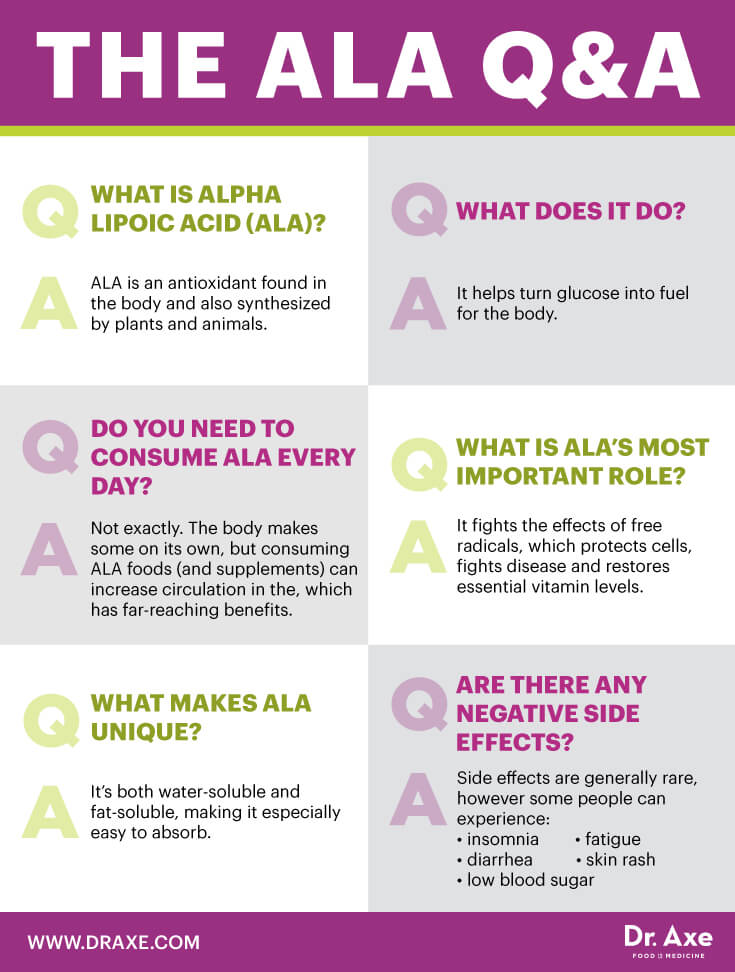
Lipoic acid is found in the body and also synthesized by plants and animals. It’s present in every cell inside the body and helps turn glucose into “fuel” for the body to run off of. Is it “essential” that you consume a certain doseage of alpha lipoic acid every day? Not exactly.

Even though we can make some of it on our own without supplements or outside food sources (which is why it’s not considered an “essential nutrient”), eating an antioxidant-packed diet plus potentially using ALA supplements can increase the amount circulating in the body, with studies show has far-reaching benefits. (1)

ALA’s most valuable role in the body is fighting the effects of free radicals which are dangerous chemical-reaction byproducts that form during the process of oxidation. Within our cells, ALA is converted into dihydrolipoic acid, which has protective effects over normal cellular reactions.

As oxidation takes place in the body over time — due to normal chemical reactions like eating or moving, but also from exposure to environmental pollutants and toxins — certain compounds can become very reactive and damage cells. At times, this causes abnormal cells to grow and multiply, or it can have other effects like slowing metabolic efficiency and changing neuron signaling.

Like other antioxidants, alpha lipoic acid can help slow down cellular damage that is one of the root causes of diseases like cancer, heart disease and diabetes. It also works in the body to restore essential vitamin levels, such as vitamin E and vitamin C, along with helping the body digest and utilize carbohydrate molecules while turning them into usable energy. (2)

In addition, alpha lipoic acid works like a synergist with B vitamins, which are needed for turning all macronutrients (this link doesn't appear on the original site any more - see alternative link here Ed.) from food into energy. And it’s synthesized and bound to protein molecules, making it act as a cofactor for several important mitochondrial enzymes. (3)

Something that makes ALA unique is that it’s both water-soluble and fat-soluble, unlike other nutrients (like B vitamins or vitamin A, C, D or E), which can only be properly absorbed with either one or the other. (4) There’s some evidence that ALA is acts as a “heavy metal chelator,” binding to metals (also called “toxins”) in the body, including mercury, arsenic, iron and other forms of free radicals that make their way into the bloodstream through water, air, chemical products and the food supply.

Finally (as if this wasn’t enough!), alpha lipoic acid can increase how the body uses a very important antioxidant known as glutathione and it might increase energy metabolism too — which is why some athletes use ALA supplements for enhanced physical performance.


5 Alpha Lipoic Acid Health Benefits

Because it acts like an antidote to oxidative stress and inflammation, alpha lipoic acid seems to fight damage done to the blood vessels, brain, neurons, and organs like the heart or liver. This mean it offers numerous benefits throughout the whole body, from naturally treating Alzheimer’s disease to controlling liver disease.

Because ALA isn’t an official essential nutrient, there hasn’t been an established daily recommendation needed to prevent a deficiency. However, being low in antioxidants in general can speed up in the aging process, resulting in symptoms like a weakened immune function, decreased muscle mass, cardiovascular problems and memory problems.

Here are five ways that including more alpha lipoic acid in your diet (and for some people taking supplements too) can help keep you feeling young and healthy:

1. Fights Diabetes and Diabetic Complications

Because alpha lipoic acid can protect cells and neurons involved in hormone production, one benefit is it offers protection against diabetes. ALA is considered an effective drug in the treatment of diabetic distal sensory-motor neuropathy, which affects about 50 percent of people with diabetes. (5) In dietary supplement form, ALA seems to help improve insulin sensitivity and might also offer protection against metabolic syndrome — a term given to a cluster of conditions like high blood pressure, cholesterol and body weight. Some evidence also shows that it can help lower blood sugar levels.

ALA is used to help relieve complications and symptoms of diabetes caused by nerve damage, including numbness in the legs and arms, cardiovascular problems, eye-related disorders, pain, and swelling. That’s why it should be part of any diabetic diet plan to treat this common disorder. People who experience peripheral neuropathy as a side effect of diabetes can find relief from pain, burning, itching, tingling and numbness using ALA, although most studies show that high doses in IV form are most effective as opposed to eating ALA-rich foods.

A major benefit of alpha lipoic supplementation in diabetics is the lowered risk for neuropathic complications that affect the heart, since around 25 percent of people with diabetes develop cardiovascular autonomic neuropathy (CAN). CAN is characterized by reduced heart rate variability and is associated with an increased risk of mortality in people with diabetes. Research suggests that supplementing with 600 milligrams a day of ALA (or “LA” as it is sometimes called) for three weeks significantly reduces the symptoms of diabetic peripheral neuropathy, although some doctors choose to use doses up to 1,800 milligrams a day safely in their patients under supervision.

2. Preserves Eye Health


Oxidative stress can damage nerves in the eyes and cause vision problems, especially in people with diabetes or older adults. Alpha lipoic acid has been used successfully to help control symptoms of eye-related disorders, including vision loss, macular degeneration, retina damage, cataracts, glaucoma and Wilson’s disease.

Results from certain studies demonstrate that long-term use of alphalipoic acid has beneficial effects on the development of retinopathy since it halts oxidative damage that can result in modified DNA in the retina. (6) As people age, their vision becomes much more compromised, which is why it’s important to eat a nutrient-dense diet well before old age to prevent degeneration of eye tissue or vision loss early on.


3. Prevents Memory Loss and Cognitive Decline

We know that a nutrient-dense diet filled with various colorful “brain foods” helps protect memory. Some health care professionals use alpha lipoic acid supplements to further help prevent their patients from experiencing neuron damage, memory loss, motor impairment and changes in cognitive functioning because of it antioxidant activity. ALA seems to easily make its way into the brain by passing the blood-brain barrier, where it can protect delicate brain and nerve tissue. It’s also used to prevent strokes and other brain problems, including dementia in older adults.

Recent experiments using rats have shown that ALA can help reverse the damage in aging cells of the brain, improve performance in memory tasks, lower oxidative damage and improve mitochondrial function, although we still don’t know how well these benefits can apply to aging humans. (7)

4. Helps Boost Glutathione


Glutathione is considered the “master antioxidant” by many experts, since it’s crucial for immunity, cellular health and disease prevention. Some studies have found that 300–1,200 milligrams of alpha lipoic acid helps increase the ability of glutathione to regulate the body’s immune response and fight off diseases like diabetes/insulin resistance or even HIV/AIDS. (8) In adults, supplementation with alpha lipoic acid seems to positively impact patients with immune deficiency syndromes and serious viruses by restoring blood total glutathione levels and improving functional reactivity of lymphocytes to T-cell mitogens.

5. Might Help Protect Skin from Damage


When it comes to battling physical signs of aging on the skin, certain studies have found that topical treatment creams containing 5 percent alpha lipoic acid can help reduce fine lines caused by exposure to sun ways. Skin damage is one side effect of high amounts of free radicals, which is why antioxidant-packed fruits and veggies are said to keep you looking young.


How Much Do We Need? Plus Best Sources of Alpha Lipoic Acid

The best way to get any nutrients is ideally through real food sources, since this is how your body knows how to absorb and use various chemicals best. ALA is found in many different plant and animal sources, since it’s bound to protein molecules (especiallylysine).

The concentration of ALA in different foods can vary widely depending on where they’re grown, the quality of the soil, how fresh they are and how they’re prepared, so it’s hard to quantify how much is in each type of food. There hasn’t been much research done to draw conclusions about how much ALA is found in particular foods, although we know vegetables and certain organ meats seem to be highest.

That being said, when you eat a whole food-based diet and vary the types of things you eat, chances are you consume a decent amount in addition to what your body already makes on its own.

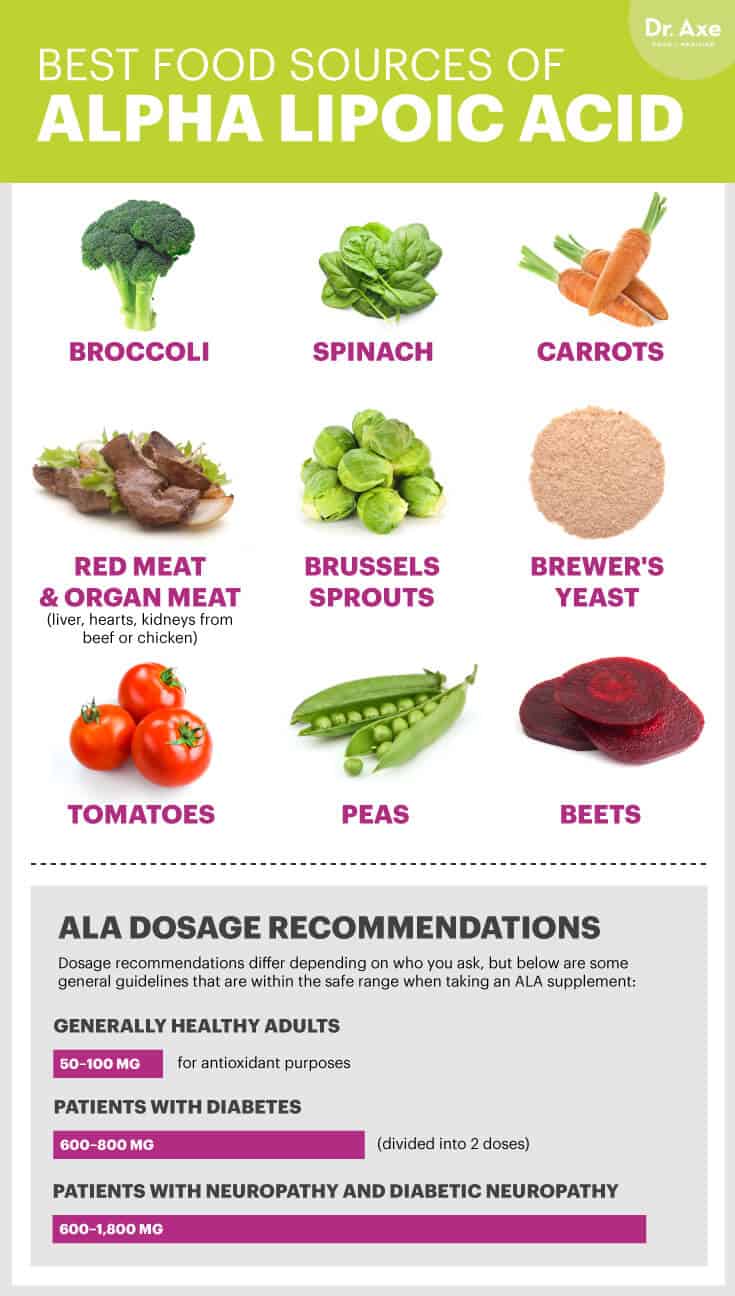
Here are some of the best food sources of alpha lipoic acid (9):
Broccoli
Spinach
Red meat
Organ meat (sch as liver, hearts, kidneys from beef or chicken)
Brussel sprouts
Tomatoes
Peas
Brewer’s yeast
Beets
Carrots 


Alpha Lipoic Acid Dosage Recommendations

If you do choose to take ALA supplements, keep in mind that taking more won’t always offer better results. While side effects and risks of taking more seem to be very rare (considering it’s a natural chemical found in the body at all times), as little as 20–50 milligrams per day seems to be beneficial for general preventative health. Larger doses up to 600–800 milligrams per day are sometimes used in patients with diabetes or cognitive disorders but not recommended for the general public.

Dosage recommendations differ depending on who you ask, but below are some general guidelines that are within the safe range:
50–100 milligrams for antioxidant purposes in generally healthy adults
600–800 milligrams for patients with diabetes (divided into two doses, usually tablets are 30–50 milligrams each)
600–1,800 milligrams for patients with neuropathy and diabetic neuropathy (dosages this high should only be taken with supervision from a doctor)

According to researchers from Oregon State University, the amounts of lipoic acid available in dietary supplements (ranging in dosage from 200–600 milligrams) can be as much as 1,000 times greater than the amounts that could be obtained through someone’s diet alone! Taking ALA supplements with a meal is believed to decrease its bioavailability, so most experts recommend taking it on an empty stomach (or at least one hour before or after) for the best results.


Possible Side Effects and Interactions of ALA

Alpha lipoic acid supplements haven’t been studied in children or women who are pregnant or breastfeeding, so right now it’s intended for use in adults only. Side effects of ALA in supplement form are generally rare but for some people can include: insomnia, fatigue, diarrhea, skin rash or low blood sugar levels (especially in people with diabetes or low blood sugar who are taking medications).

Some potential interactions, or circumstances where you want to speak to your doctor before taking extra alpha lipoic supplements, include:
if you have a thiamine deficiency (vitamin B1), which is associated with liver disease/alcohol abuse
if you’re taking any medications for diabetes for insulin control, since this can raise the risk for hypoglycemia and low blood sugar
if you’re recovering from chemotherapy treatment or taking cancer medications
if you have a history of a thyroid disorder

http://www.truemuscle.com/alpha-lipoic-acid-300mg