Showing posts with label Care. Show all posts

Sunday, 14 May 2017

Nursing Care of Individuals with Sciatica


By now we're pretty familiar with the in's and out's of sciatica.  If you're caring for a loved one who's suffering from sciatica I've made a handy table listing the types of interventions available.  Pharmaceutical treatments will have to be approved by a licensed healthcare provider.  However non-pharmaceutical treatments can be done at your own discretion and can be as equally helpful in soothing symptoms.

(Lewis, Dirksen, Heitkemper, & Bucher, 2014)

This website is from the UK but provides a more detailed listing of treatments available.  It covers the pharmaceutical and non-pharmaceutical interventions listed here and some more.  Give it a read!


This video gives you 3 exercises you can do with your patient at home with a chair or table!


This video is an example of a discussion between a person with sciatica and a health provider.  They go through some exercises that examines how sciatica affects this individual.  Good watch for any person working at an in-patient clinic!


References

 Lewis, S., Dirksen, S., Heitkemper, M., & Bucher, L. (2014). Musculoskeletal Problems. In Medical-Surgical Nursing (9th ed., Vol. 2, p. 1548). Elsevier.  


Saturday, 22 April 2017

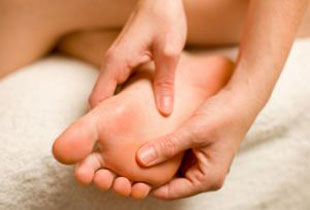
Foot Care For Neuropathy Patients


Today's post from indypodiatry.com (see link below) is a useful list of tips to avoid foot problems with neuropathy. The lack of sensation in toes and feet; or even the excess sensation in the same areas can lead to misleading signals and all kinds of accidents and mishaps. For these reasons it's important to take care of your feet and keep an eye out for injuries you may not be feeling or noticing. It's not a comprehensive list but there are some sensible ideas here.
 
Diabetic Neuropathy: Loss of Protective Sensation
Michael J..Helms:DPM Shelley F Bowers DPM

One of the potential problems associated with diabetes is the loss of the ability to feel things in the feet. This condition results in an inability to feel pain or other stimulus. This condition is known as diabetic peripheral neuropathy.

Our ability to feel pain is an important protective mechanism. Pain warns us to move our feet away from a hot register. It tells us we stepped on a piece of glass and we need to get the glass out of our foot. Pain let’s us know when we break a bone in our foot and prompts us to get treatment. Diabetics with neuropathy lack the important feedback of knowing when there is an injury to the foot. A diabetic with neuropathy can break a foot bone and not be aware of this because they do not feel the pain. The results can be devastating, including the potential loss of a foot or leg to amputation.


Steps to Avoid Serious Foot Problems

If you have diabetes and a loss of protective sensation there are steps you must take to help you avoid serious foot problems. Here is a list of important tips to help guide you:


Inspect your feet daily. Since you cannot feel when a problem is present you need to use your vision to replace your loss of sensation. Use a mirror to see the bottom of your feet. Call Drs. Helms or Bowers if you find new redness, swelling, bruising, cuts or other changes.


Always wear shoes, even around your home. The shoes will act as a protective barrier.


Change into different shoes once or twice each day. This allows for changing pressure point on the bottom of your feet and decreases the risk of developing a callus or sore on your feet. 


Make sure your shoes fit well and are not overly worn. You should be professionally fit, either in our office or at stores where the sales staff knows how to measure feet and has experience working with diabetic patients. Our office can direct you to the appropriate stores. 


Use open toe support hose. If you wear support hose prescribed by one of your doctors, make sure you use the type with open toes. This can help prevent possible irritation or the development of sores on your toes. 


Always wear special shoe inserts made by your doctor. If Dr Helms or Dr Bowers has made or dispensed special shoe inserts, be sure to always wear these in your shoes. These inserts can help prevent foot sores or foot ulcerations.


Ask Dr Helms or Dr Bowers about personal digital thermometry. This is a simple, at home tool you can use to help detect many diabetic foot problems in their early stages. Early detection will lead to treatment that might prevent foot sores, ulcerations or amputations.


Exercise on a regular basis. Studies have shown that patients with diabetic loss of protective sensation that engage in aerobic exercise have fewer amputations.

Be sure to clear this with your medical doctor before beginning a new program. Also, be sure to discuss appropriate exercise shoes and socks with Dr Helms or Dr Bowers. 

NEVER trim your own calluses or corns. Corns and calluses occur in places where there is rubbing or too much pressure. Corns and calluses need to be trimmed back on a regular basis because they can lead to diabetic foot ulcers. These should only be trimmed by your podiatrist. 


Do not have pedicures. Diabetics with loss of protective sensation should have their toenails trimmed at the podiatrists office.


http://www.indypodiatry.com/diabetic-neuropathy.php

Tuesday, 14 March 2017

Autonomic Neuropathy And Exercise Take Care What You Do


Today's post from neuropathydr.com (see link below) is a cautionary tale for those neuropathy patients who have been diagnosed as having autonomic neuropathy. A reminder for all those who are unaware what that is: it is a form of nerve damage that affects all the involuntary functions of the body that you normally don't have to think about and as such, is a dangerous but unfortunately relatively common form of neuropathy. This article warns such patients to be more aware when they decide to take on exercise as a part of their treatment - it may not be the best option in your case and needs to be carefully thought about before starting. Now this blog is (reluctantly) all for exercise for neuropathy patients but it's no easy option at the best of times! People with autonomic neuropathy need also to be aware of their limitations thanks to that form of neuropathy and should seek advice from their doctor or therapist. A useful article.
 
Exercising Caution With Autonomic Neuropathy
Posted by john on February 9, 2017

If you’ve been diagnosed with autonomic neuropathy, you know you’re at risk for some serious medical issues. Autonomic neuropathy (i.e., nerve damage to the autonomic nervous system) can affect every system in the body, especially:

• Cardiovascular – your heart, blood pressure and circulation

• Respiratory

• Gastrointestinal – your digestion, ability to ability to empty your bowels

• Genitourinary – erectile dysfunction and loss of bladder control

• While you’re dealing with some or all of these issues, exercise may not be on your radar.

But it should be.

Exercise can help control the symptoms of your underlying illness (whatever caused your autonomic neuropathy) and by doing that, you can help lessen the symptoms of your autonomic neuropathy.

But a word of caution is in order here.

The very nature of your autonomic neuropathy can affect the systems that are most sensitive to the effects of exercise. Any exercise program you begin should be designed and monitored by a medical professional well versed in the effects of autonomic neuropathy, like your NeuropathyDR® clinician.

Use Vs. Disuse

When you’re thinking about starting an exercise program and you’re thinking about how dangerous it can be, you also need to consider the effects of not starting an exercise program. The effects of not exercising are called “disuse syndrome”. We’ll discuss more about “disuse syndrome” in our next post.

What You Need To Think About Before You Start Exercising

Think about what happens to your body when you exercise. Your heart rate increases, your breathing becomes labored, you sweat.

Every single one of those results is controlled by the autonomic nervous system. Autonomic neuropathy can seriously impact how your body responds to the stimulus of exercise. And your body may not react as it should.

Heart rate – If your autonomic neuropathy affects your cardiovascular system, you need to make sure that your exercise program is designed and monitored by your NeuropathyDR® clinician. Your autonomic neuropathy can lead to abnormal heart rate, inability to properly regulate blood pressure and redistribution of blood flow. Your cardiovascular autonomic neuropathy may cause you to have a higher resting rate and lower maximal heart rates during exercise.

Blood pressure – Blood pressure response with posture change and during exercise is abnormal in patients with cardiovascular autonomic neuropathy. Postural hypotension, defined as a drop in blood pressure may be seen. This can mean that the blood pressure doesn’t react normally during exercise. Symptoms are similar to hypoglycemia and may be mistaken for a drop in blood glucose even though it’s actually a drop in blood pressure. Patients should be alerted to the potential confusion in these symptoms and instructed to check blood glucose before treating for hypoglycemia.

Sweating and Disruption of Blood Flow – Autonomic neuropathy may reduce or even eliminate your ability to sweat. The loss of sweating, especially in your feet, can cause dry, brittle skin on the feet and you can develop skin ulcers. It can also make it more difficult for your body to respond to cold and heat. You need to make sure that you’re taking proper care of your feet before and during any exercise program. Make sure your shoes fit properly and examine your feet regularly to make sure you don’t have any sores, cracks or ulcers.

Autonomic neuropathy can have a serious effect on the very systems in the body that are directly affected by exercise. Make sure you talk to your local NeuropathyDR® clinician before you start an exercise program and let them monitor your progress.

For more information on coping with neuropathy, get your Free E-Book and subscription to our newsletters at http://neuropathydr.com.

http://neuropathydr.com/autonomic-neuropathy-4/

Monday, 20 February 2017

ANEMIA PROMISING ONE MINUTE POINT OF CARE TEST


A simple point-of-care testing device for anemia could provide more rapid diagnosis of the common blood disorder and allow inexpensive at-home self-monitoring of persons with chronic forms of the disease.

The disposable self-testing device analyzes a single droplet of blood using a chemical reagent that produces visible color changes corresponding to different levels of anemia. The basic test produces results in about 60 seconds and requires no electrical power. A companion smartphone application can automatically correlate the visual results to specific blood hemoglobin levels.
By allowing rapid diagnosis and more convenient monitoring of patients with chronic anemia, the device could help patients receive treatment before the disease becomes severe, potentially heading off emergency room visits and hospitalizations. Anemia, which affects two billion people worldwide, is now diagnosed and monitored using blood tests done with costly test equipment maintained in hospitals, clinics or commercial laboratories.
Because of its simplicity and ability to deliver results without electricity, the device could also be used in resource-poor nations.

A paper describing the device and comparing its sensitivity to gold-standard anemia testing was published August 30 in The Journal of Clinical Investigation. Development of the test has been supported by the FDA-funded Atlantic Pediatric Device Consortium, the Georgia Research Alliance, Children's Healthcare of Atlanta, the Georgia Center of Innovation for Manufacturing and the Global Center for Medical Innovation.
"Our goal is to get this device into patients' hands so they can diagnose and monitor anemia themselves," said Dr. Wilbur Lam, senior author of the paper and a physician in the Aflac Cancer and Blood Disorders Center at Children's Healthcare of Atlanta and the Department of Pediatrics at the Emory University School of Medicine. "Patients could use this device in a way that's very similar to how diabetics use glucose-monitoring devices, but this will be even simpler because this is a visual-based test that doesn't require an additional electrical device to analyze the results."
The test device was developed in a collaboration of Emory University, Children's Healthcare of Atlanta and the Georgia Institute of Technology -- all based in Atlanta. It grew out of a 2011 undergraduate senior design project in the Wallace H. Coulter Department of Biomedical Engineering at Georgia Tech and Emory University. In 2013, it was among the winners of Georgia Tech's InVenture Prize, an innovation competition for undergraduate students, and won first place in the Ideas to SERVE Competition in Georgia Tech's Scheller College of Business.

Using a two-piece prototype device, the test works this way: A patient sticks a finger with a lance similar to those used by diabetics to produce a droplet of blood. The device's cap, a small vial, is then touched to the droplet, drawing in a precise amount of blood using capillary action. The cap containing the blood sample is then placed onto the body of the clear plastic test kit, which contains the chemical reagent. After the cap is closed, the device is briefly shaken to mix the blood and reagent.
"When the capillary is filled, we have a very precise volume of blood, about five microliters, which is less than a droplet -- much less than what is required by other anemia tests," explained Erika Tyburski, the paper's first author and leader of the undergraduate team that developed the device.
Blood hemoglobin then serves as a catalyst for a reduction-oxidation reaction that takes place in the device. After about 45 seconds, the reaction is complete and the patient sees a color ranging from green-blue to red, indicating the degree of anemia.

A label on the device helps with interpretation of the color, or the device could be photographed with a smartphone running an application written by Georgia Tech undergraduate student Alex Weiss and graduate student William Stoy. The app automatically correlates the color to a specific hemoglobin level, and could one day be used to report the data to a physician.
To evaluate sensitivity and specificity of the device, Tyburski studied blood taken from 238 patients, some of them children at Children's Healthcare of Atlanta and the others adults at Emory University's Winship Cancer Institute. Each blood sample was tested four times using the device, and the results were compared to reports provided by conventional hematology analyzers.

The work showed that the results of the one-minute test were consistent with those of the conventional analysis. The smartphone app produced the best results for measuring severe anemia.
"The test doesn't require a skilled technician or a draw of venous blood and you see the results immediately," said Lam, who is also an assistant professor in the Coulter Department of Biomedical Engineering. "We think this is an empowering system, both for the general public and for our patients."
Tyburski and Lam have teamed up with two other partners and worked with Emory's Office of Technology Transfer to launch a startup company, Sanguina, to commercialize the test, which will be known as AnemoCheck™. The test ultimately will require approval from the FDA. The team also plans to study how the test may be applied to specific diseases, such as sickle cell anemia -- which is common in Georgia.
The device could be on pharmacy shelves sometime in 2016, where it might help people like Tyburski, who has suffered mild anemia most of her life. "If I'd had this when I was kid, I could have avoided some trips to the emergency room when I passed out in gym class," she said.

About a third of the population is at risk for anemia, which can cause neurocognitive deficits in children, organ failure and less serious effects such as chronic fatigue. Women, children, the elderly and those with chronic conditions such as kidney disease are more likely to suffer from anemia.


Wednesday, 28 December 2016

Full Flower Moon The Little Things Self Care


May is in full flower.

The lilacs are in honey. The honeysuckle's in oil, the dandelion infusion is done. The violets have dried on my work island into tiny little curly blue jewels.

The nettles are getting taller, and the cleavers is celebrating. Celandine spots the roads with yellow, and apple blossoms are everywhere. The Lady's Slipper orchids have begun. The black cherry tree flowers are minutes away from opening. Everything is humming with life.

It's been a busy time for me, but not too busy. I am finding a good rhythm lately and am so grateful for the warmer weather, singing frogs, and time in nature. Things will shift again soon as my kids are almost finished with programming and will launch into summertime spontaneity and short burst camps and such. I can't wait to get myself into the river water.

I'm finding rooting in my not-as-new location (now here 2 1/2 years.) I see people I know at the market, I don't get lost (as often), and I'm finding a sense of belonging and community that I hope will grow and deepen.

The cycles of my plant allies are reliable sources of  daily replenishment, of course. This week I'm putting together my Lady's Slipper Ring membership herbals and they are full of flowers and nectar and the healing that bubbles in our spirit when we experience beauty.

My first Aromatic Muse perfume (FloraLuna) departed to their first new Queens already. I'm incredibly inspired by this journey and have begun concocting something unique for June, while soaking up the glamorous FloraLuna in the meantime. It is so.... womanly. mm

Taking care of ourselves is so important, and having beautiful, earthly, sensory conduits for self-care catalyzes cell-response, sensory pleasure responses, immune system functions, positive memories associated with self-love, and creates a biological connection to feeling good without attachment to collateral. Self care first - then achievement becomes enabled. Although I teach this, I am still a student in daily practice. I must be deliberate and devoted to moments of time carved out for my health and well being.

Here are some snapshots of my pleasure medicine as of late .... 

what beauty and pleasure restores you?


Friday, 30 September 2016

Pain Care Bill of Rights


Something to think about when your sitting on the other side of a table from a doctor who's had a long day, or has a hangover, or didn't pay attention in neurology class, or just doesn't give a damn!


As a person with pain, you have:

The right to have your report of pain taken seriously and to be treated with dignity and respect by doctors, nurses, pharmacists and other healthcare professionals.

The right to have your pain thoroughly assessed and promptly treated.

The right to be informed by your doctor about what may be causing your pain, possible treatments and the benefits, risks and costs of each.

The right to participate actively in decisions as to how to manage your pain.

The right to have your pain reassessed regularly and your treatment adjusted if your pain has not been eased.

The right to be referred to a pain specialist if your pain persists.

The right to get clear and prompt answers to your questions, take time to make decisions, and refuse a particular type of treatment if you choose.

Although not always required by law, these are rights you should expect, and if necessary demand, for your pain care.