Showing posts with label Stem. Show all posts

Tuesday, 27 September 2016

Stem cells treatment for sciatic nerve injury


Stem cells treatment for sciatic nerve injury is a movement with modern preferred subject material, we all know in the evaluation from the internet search engine every single child provide exact data most of us look at looking for graphics in connection with your Stem cells treatment for sciatic nerve injury . as well as the final results you can view under handled several of the snap shots is definitely the case in point.

Some images on Stem cells treatment for sciatic nerve injury


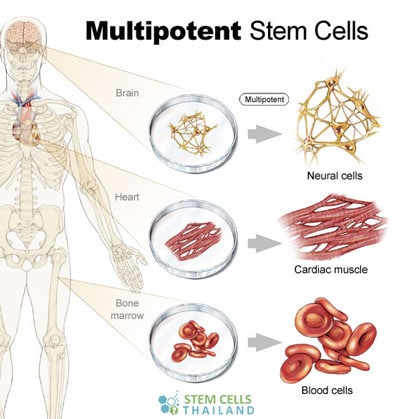
Thai Regeneration Center News and Blog Page 3 multipotent-stem-cells Treatment for Sciatic Nerve Injury Pinched Nerves & Sciatica Effective Cell Treatments COPD & Emphysema Lung Repair Regeneration Thai Regeneration Center News and Blog Oligopotent Cell Potency Gastrulation germ layer definition and formation in humans

Stem cells treatment for sciatic nerve injury - this has been shared with the expectation that we could boost useful to any person. The next few paragraphs might offer for a a blueprint remember when you are mystified to choose the best suited lead This Stem cells treatment for sciatic nerve injury threads can be your easiest solution for being given to the effort approach, precisely as it seems to have the liechtenstein package definitely will look further thrilled Stem cells treatment for sciatic nerve injury - Valuable suitable for you thus most of us looking to uncover a stable reference which will will assist you to look for contemplation lacking mix-up. take always into account that will lesemarke this page, considering that it could be a day you require it again spine while your current inspirational concepts.


Thursday, 15 September 2016

TOXIN SECRETING STEM CELLS TREAT BRAIN TUMORS IN MICE


Harvard Stem Cell Institute scientists at Massachusetts General Hospital have devised a new way to use stem cells in the fight against brain cancer. A team led by neuroscientist Khalid Shah, MS, PhD, who recently demonstrated the value of stem cells loaded with cancer-killing herpes viruses, now has a way to genetically engineer stem cells so that they can produce and secrete tumor-killing toxins.
In the AlphaMed Press journal Stem Cells, Shah's team shows how the toxin-secreting stem cells can be used to eradicate cancer cells remaining in mouse brains after their main tumor has been removed. The stem cells are placed at the site encapsulated in a biodegradable gel. This method solves the delivery issue that probably led to the failure of recent clinical trials aimed at delivering purified cancer-killing toxins into patients' brains. Shah and his team are currently pursuing FDA approval to bring this and other stem cell approaches developed by them to clinical trials.
"Cancer-killing toxins have been used with great success in a variety of blood cancers, but they don't work as well in solid tumors because the cancers aren't as accessible and the toxins have a short half-life," said Shah, who directs the Molecular Neurotherapy and Imaging Lab at Massachusetts General Hospital and Harvard Medical School.
"A few years ago we recognized that stem cells could be used to continuously deliver these therapeutic toxins to tumors in the brain, but first we needed to genetically engineer stem cells that could resist being killed themselves by the toxins," he said. "Now, we have toxin-resistant stem cells that can make and release cancer-killing drugs."
Cytotoxins are deadly to all cells, but since the late 1990s, researchers have been able to tag toxins in such a way that they only enter cancer cells with specific surface molecules; making it possible to get a toxin into a cancer cell without posing a risk to normal cells. Once inside of a cell, the toxin disrupts the cell's ability to make proteins and, within days, the cell starts to die.
Shah's stem cells escape this fate because they are made with a mutation that doesn't allow the toxin to act inside the cell. The toxin-resistant stem cells also have an extra bit of genetic code that allows them to make and secrete the toxins. Any cancer cells that these toxins encounter do not have this natural defense and therefore die. Shah and his team induced toxin resistance in human neural stem cells and subsequently engineered them to produce targeted toxins.
"We tested these stem cells in a clinically relevant mouse model of brain cancer, where you resect the tumors and then implant the stem cells encapsulated in a gel into the resection cavity," Shah said. "After doing all of the molecular analysis and imaging to track the inhibition of protein synthesis within brain tumors, we do see the toxins kill the cancer cells and eventually prolonging the survival in animal models of resected brain tumors."
Shah next plans to rationally combine the toxin-secreting stem cells with a number of different therapeutic stem cells developed by his team to further enhance their positive results in mouse models of glioblastoma, the most common brain tumor in human adults. Shah predicts that he will bring these therapies into clinical trials within the next five years.

Friday, 17 June 2016

Stem Cell Therapy For Neuropathy


Today's article from medicalexpress.com (see link below) discusses advances in the study of the potential use of stem cells to block pain signals and inflammation for neuropathy sufferers. It's not a new idea and has been seen in articles for some time now but it does seem that research progress is being made. The average neuropathy patient can be forgiven for saying; 'That's all well and good but when will our doctors be able to begin this sort of therapy with us?' It's true; the internet is littered with possibilities for the future but that's how it works and these days, we can follow developments as they happen. It's worth reminding ourselves that knowledge is a sort of power over the disease.

A step forward for stem cell therapy
July 11, 2012

Aline Betancourt, research associate professor with the Tulane Center for Stem Cell Research and Regenerative Medicine, developed a technique to produce standardized stem cells that will turn off the body’s inflammatory response. Credit: Paula Burch-Celentano (Medical Xpress) -- A new study shows the potential of a method to prepare stem cells that may provide relief from a painful diabetes complication. Aline Betancourt of the Tulane University Center for Stem Cell Research and Regenerative Medicine, with colleagues at Tulane and the Ochsner Clinic Foundation, developed a new treatment using modified stem cells to control inflammation.   

The study results released on Monday (July 9) in the journal Stem Cells Translational Medicine suggest that the use of stem cells specially prepared to turn off the body’s inflammatory response represent a promising new therapeutic strategy for diabetic peripheral neuropathy that should be further investigated. About 70 percent of diabetics have neuropathy (nerve damage) resulting from the disease, according to the National Institutes of Health. Severe peripheral neuropathy causes excruciating pain in the toes, feet, legs, hands or arms. Even a tiny amount of external pressure can be excruciating. Inflammation is considered a major culprit. Previous studies have proven mesenchymal stem cells (MSCs) are safe and effective in treating inflammatory diseases. MSCs, which are taken from adult donors, can give rise to a large number of tissue types such as bone, fat and cartilage.“The problem,” Betancourt explains, “is that the current methods for preparing these cells yield a mixed pool of undefined cells that aren’t consistently effective in the clinic. Our laboratory developed a new method that results in a consistent, uniform MSC population and optimizes their anti-inflammatory effects. We call these cells MSC2s.”When the researchers tested the MSC2 cells on mice with peripheral neuropathy, they saw a significant improvement in inflammation and other symptoms — as much as 40 percent for the MSC2 group over the mice that received no treatment. At best, there was only 14 percent improvement in those administered conventional MSCs. Provided by Tulane University

http://medicalxpress.com/news/2012-07-stem-cell-therapy.html